
There is a version of detailing that is a hobby and a version that is a job. The hobby version ends with a ceramic coating and paint that looks better than it did leaving the factory. The job version ends when the next hour of work stops adding to the sale price.
If you are flipping, you want the second one. A budget used car has a ceiling, and no amount of polish moves it. What detailing does is get you to that ceiling instead of a few hundred dollars below it, and get you there in days rather than weeks. The ceiling itself is set at purchase, so start from which cars are worth detailing for resale before you spend a Saturday on one.
Smell, Glass, Shine: The Order That Matters
Watch someone look at a used car and the sequence is always about the same. They walk up and look at the front of the car. They open the door, and within two seconds they have formed an opinion from the smell. They sit in the driver's seat and look through the windshield. Then, eventually, they look at the paint.
That order is the whole strategy. Buyers are not evaluating your work, they are pattern matching for neglect, and neglect shows up in smell and grime long before it shows up in swirl marks. A car that smells like an ashtray is discounted by every single person who opens the door, and no amount of gloss on the hood buys that back.
The corollary is the useful part: the cheapest jobs are also the highest-return ones. Interior extraction, glass, and headlights cost a fraction of paint correction and move the needle further.
The Interior Is Where the Money Is
Give the interior the larger share of your hours. It is where the buyer sits while deciding, and it is where a neglected car is most obviously neglected.
Start by stripping it. Floor mats out, everything out of the door pockets and console, seats slid all the way forward and then all the way back. Vacuum properly, including the seat rails and the seam where the carpet meets the center console, which is where a decade of debris collects.
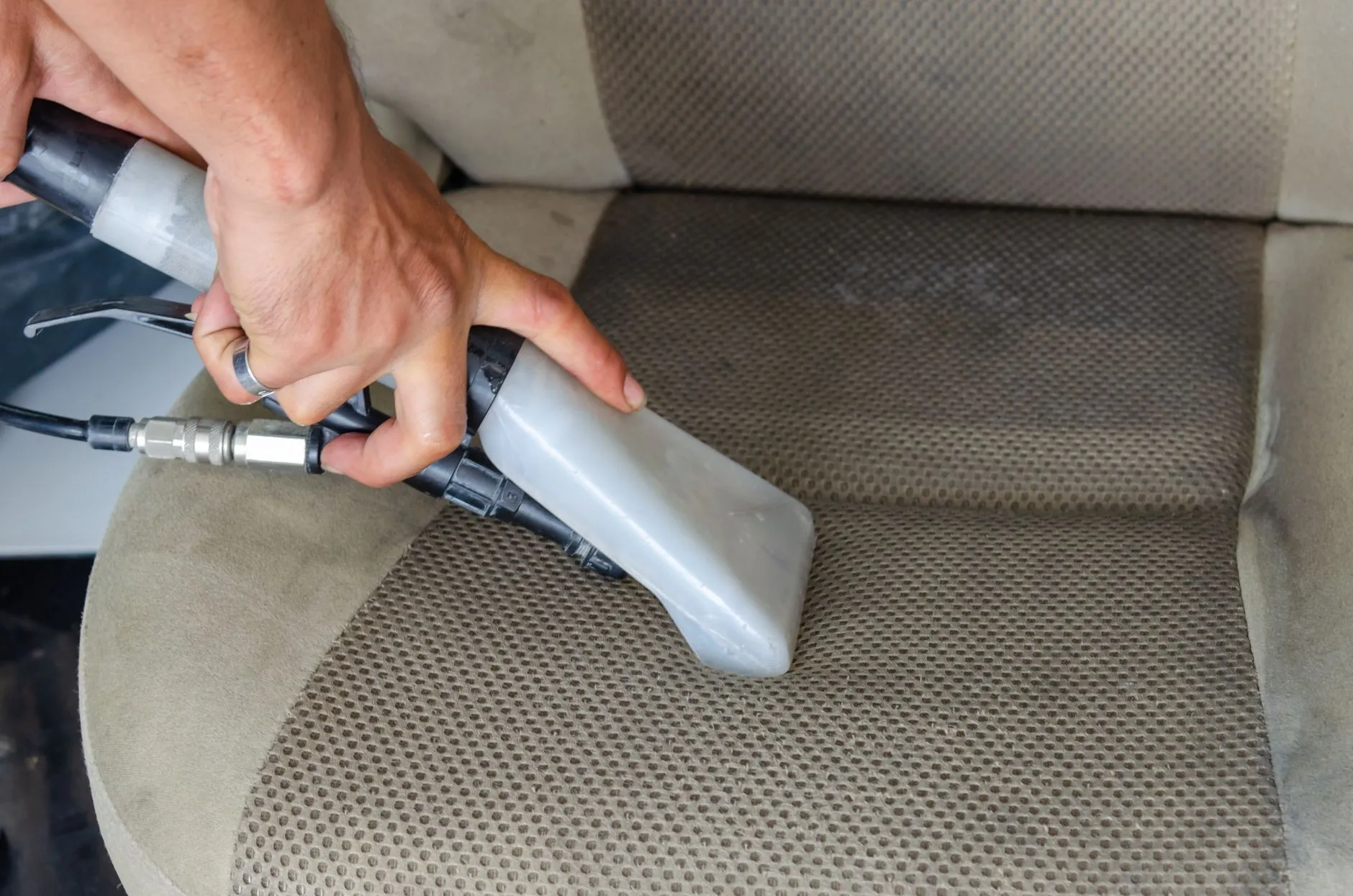
Then extract. This is the job that separates a car that looks cleaned from a car that looks new, and it is why a portable extractor is the first tool a flipper should own. A small portable carpet extractor sprays cleaning solution into the carpet and pulls it back out along with everything that was living in there. The color change on a light grey carpet is dramatic enough that it is worth doing half the car first just to see it.
Pair it with a dedicated carpet and upholstery cleaner for pre-treating stains, and a set of drill brush attachments for agitating carpet and floor mats. The drill brushes feel like a gimmick until the first time you use one on a floor mat that you had written off.
For hard surfaces, an interior cleaner and a stack of microfiber towels handle the dash, door cards, and console. Buy microfiber in bulk. You will use more than you expect and washing them mid-job is how afternoons disappear.
One judgment call: leave the interior looking clean rather than shiny. Greasy dressings on a dashboard photograph as glare, they attract dust within a week, and experienced buyers read heavy shine as a car that was prepped to sell rather than a car that was looked after.
Odor: The Silent Deal Killer
Smell deserves its own section because it is the one problem that loses deals without anyone mentioning it. Buyers rarely say "it smelled like smoke." They say they want to think about it, and then they stop replying.
The rule is to remove the source instead of covering it. Smoke residue settles into carpet, cloth seats, and the headliner, and it circulates through the ventilation system every time the fan runs. Pet odor lives mostly in the carpet and the seat foam underneath it. Mildew means water is getting in somewhere, which is a repair rather than a cleaning job, so find the leak before you spend a day on the symptom.
Extraction handles most of it. Clean the headliner gently and never soak it, because the foam-backed adhesive lets go when it gets wet and a sagging headliner costs more to fix than the smell did. Replace the cabin air filter, which takes ten minutes on most cars and is the step everyone forgets.
For smoke that survives all of that, an ozone generator run in a closed car breaks down the compounds that cleaning cannot reach. Ozone is genuinely effective and genuinely not something to be casual about: nobody and nothing should be in the car while it runs, and the car needs a long airing out afterward before anyone sits in it.
An enzyme-based odor eliminator is the gentler option for pet smells, since enzymes digest the organic material producing the odor rather than perfuming over it. Whatever you do, resist hanging an air freshener. A strong pine smell in a used car makes every buyer assume something is being hidden, and they are usually right.
 Buy the Dirty Car Before Someone Else Does
Filthy cars with bad photos are underpriced because most buyers cannot see past them. CarSnipe checks  Facebook Marketplace every 3 minutes on Pro and sends a
  Telegram alert when a vehicle matching your criteria gets listed, so you get an early look at the ones nobody else bothered with.
Glass and Headlights: Cheapest Wins Available
Glass costs almost nothing to do and it is the difference between photos that look sharp and photos that look like they were taken through a fog.
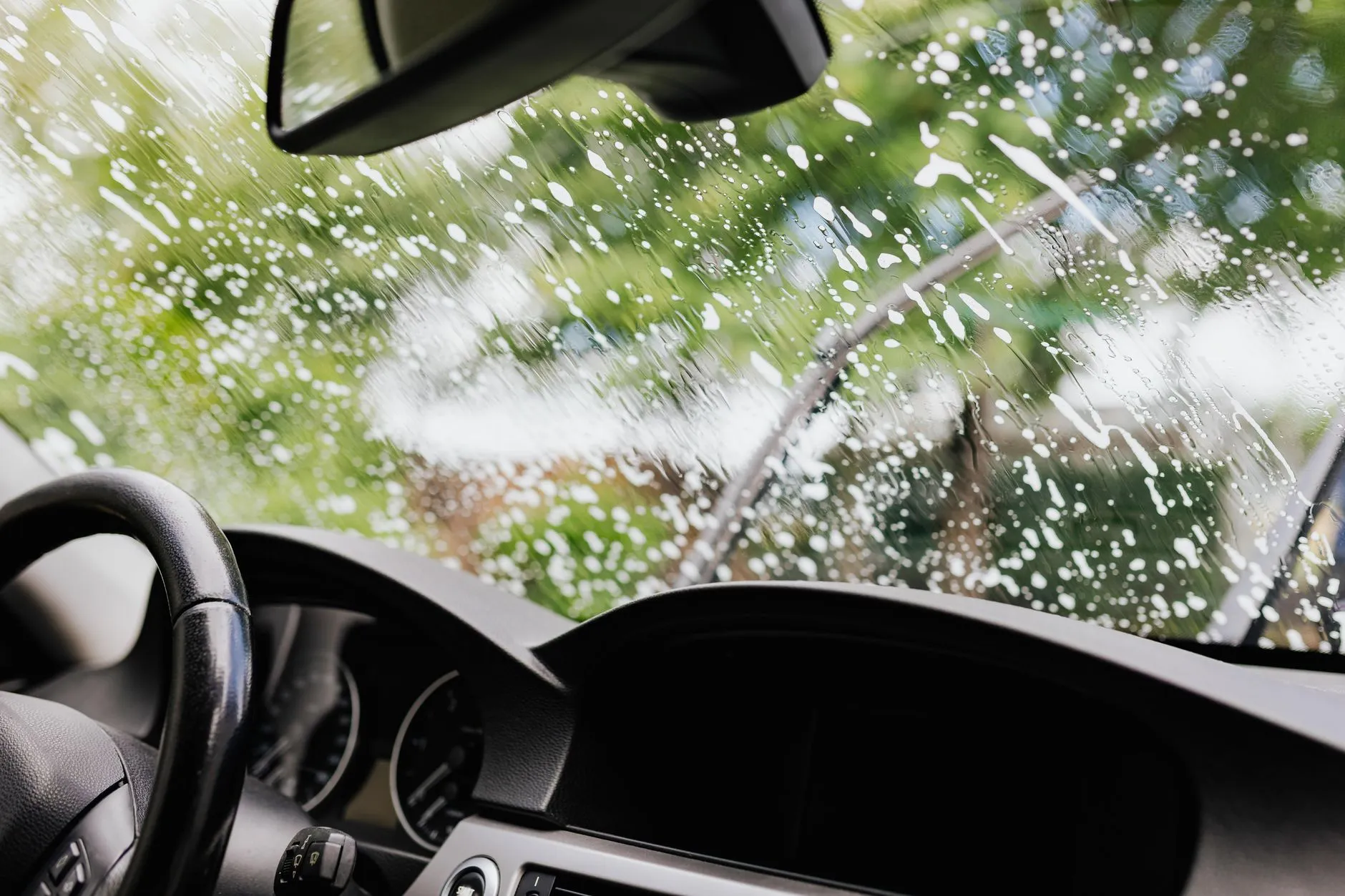
Interior glass builds up a film from plastics off-gassing in the heat, and most people never clean it, which means the first time a buyer sits in the car and looks at the windshield with the sun in front of them, they see haze. Use an ammonia-free automotive product like a dedicated glass cleaner with two towels, one to clean and one to buff dry, and do the inside of the windshield in two passes with the towel moving in different directions so you can tell which side any remaining streaks are on.
Headlights are the other one. Yellowed, hazy headlights make a car look ten years older than it is, and they are directly in the buyer's field of view as they walk up. A headlight restoration kit takes well under an hour for the pair and changes the apparent age of the entire front end. Of every cheap job on this list, this is the one with the largest visual payoff per dollar.
Paint: One Pass, Not Three
Paint work is where flippers most often overspend their own time. The enthusiast approach is a multi-stage correction with a compound step, a polish step, and a protection step. On a car selling for a few thousand dollars, that is a hobby.
The resale version is three things: wash properly, decontaminate, and run one polish pass.
Wash with two buckets and a grit guard insert so you are not dragging the dirt you just removed back across the paint. This is the step that creates swirl marks in the first place, and doing it badly means creating work for yourself twenty minutes later.
Then clay. A clay bar kit pulls bonded contamination off the clear coat that washing leaves behind. Run your hand over the paint in a plastic bag before and after and the difference is obvious. Skipping this step means your polish pass is grinding contamination into the finish.
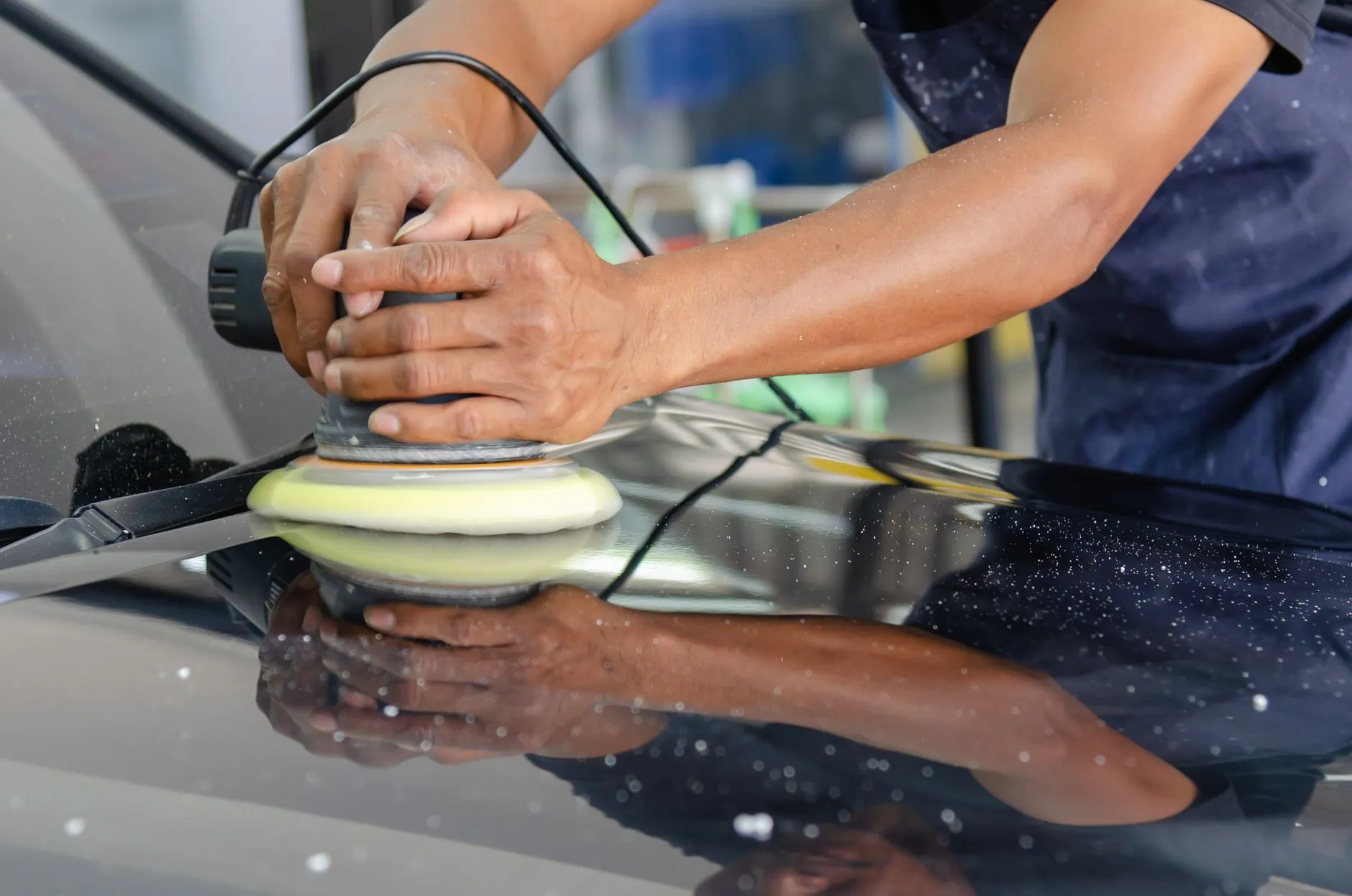
For the polish itself, a dual action polisher is the tool to own. The pad oscillates as well as rotates, which makes it hard to burn through paint the way a rotary buffer can in unpracticed hands. Combine it with an all-in-one product like a one-step compound and a pack of foam polishing pads, and one pass will remove most light swirls and oxidation and bring back gloss.
One pass. Then stop. The second and third passes are for cars whose buyers are looking at paint under LED lights, and your buyer is looking at mileage and price.
Trim, Tires, and the Engine Bay
Three quick jobs that punch above their time cost.
Faded black trim is one of the strongest visual signals of an old car, and it is fixable. Sun-bleached grey bumper trim and mirror caps respond to a dedicated plastic trim restorer, and the good ones last months rather than washing off in the first rain. On a car with heavily faded trim this is arguably the highest-impact thirty minutes of the entire detail.
Tires get dressed last, after everything else, because the product slings onto clean paint if you do it early. A satin finish photographs better than a wet-look gloss, which tends to read as cheap.
The engine bay gets a wipe down, not a wash. Pull the loose leaves out of the cowl, wipe the plastic covers, and leave it. Do not pressure wash it. Water forced into connectors and sensors creates electrical problems worth more than the appearance, and a spotless engine bay on an inexpensive used car makes experienced buyers wonder what leak was being washed away.
What to Skip Entirely
Ceramic coatings. Real cost, real time, and a buyer at this price point neither knows nor cares. A spray sealant gives you the gloss for the photos at a fraction of the effort.
Multi-stage paint correction. Covered above. Diminishing returns arrive fast on a car with a hard ceiling.
Seat covers over worn seats. Every buyer lifts them, and finding a torn seat underneath converts a cosmetic issue into a trust issue. If the seats are bad, either fix them or price them in and be upfront.
Painting over rust. Rattle-canning a rust spot is worse than leaving it, because it looks like concealment and buyers assume whatever is under fresh paint is worse than what they can see.
Deodorizing without cleaning. Established above, and worth repeating because it is the most common shortcut and the most counterproductive one.
The Detail Exists So the Photos Work
This is the part that ties the work to the money. Nearly every buyer decides whether to message you based on photographs, so a detail that never makes it into good photos was a favor to the next owner rather than an investment.
Shoot the same day, before the car collects dust again. Open shade or the hour before sunset, because direct midday sun creates hard reflections that hide the paint you just polished. Find a plain background, since a cluttered driveway makes an expensive car look cheap. Get all the way around the car, then shoot the interior from both front doors, the odometer, the engine bay, and the tire tread. Photograph any flaw you know about deliberately, because a buyer who sees the scratch in the listing does not treat it as a discovery during the walkaround.
Volume matters more than artistry. Listings with twenty honest photos get more messages than listings with five good ones, and messages are what turn into negotiating leverage. Our guide on flipping cars on Facebook Marketplace covers how to write the listing that goes with them.
Time and Money by Job
Rough guide for a car in average condition. Order is by return, not by sequence.
| Job | Time | Return |
|---|---|---|
| Interior extraction and deep clean | 2 to 4 hours | Highest |
| Odor removal at the source | 1 hour plus drying | Highest |
| Headlight restoration | Under 1 hour | High |
| Glass, inside and out | 30 minutes | High |
| Trim restoration | 30 minutes | High |
| Wash, clay, single polish pass | 3 to 4 hours | Medium |
| Tires and wheels | 45 minutes | Medium |
| Engine bay wipe down | 20 minutes | Low but cheap |
| Ceramic coating | A full day | None at this price point |
Most cars in reasonable shape come together in a long day. A neglected one takes two, mostly because extraction needs drying time between passes. If you are into a third day, the remaining work is for you rather than the buyer. Fold your hours into the numbers the same way you would parts, using the approach in our breakdown of real flipping profit margins.
Get to Every Deal Sooner
Detailing turns a cheap car into a clean one. Finding the cheap car first is the other half. CarSnipe checks Facebook Marketplace every 3 minutes on Pro while the computer is on and awake, and pings your Telegram when a match is listed, so you can be messaging the seller while everyone else is still scrolling.
Frequently Asked Questions
It changes two things that both affect your number: what buyers are willing to offer, and how fast the car sells. A clean car signals a maintained car, and buyers discount hard for anything that suggests neglect because they cannot tell the difference between a dirty car and an abused one. The bigger effect for a flipper is usually speed. A well-presented car gets more messages, and more messages means less negotiating pressure and fewer days of holding cost. Where detailing stops paying is at the enthusiast end, since a buyer looking at a budget used car will not pay extra for a ceramic coating or multi-stage paint correction.
Remove the source rather than masking it. Smoke residue settles into carpet, cloth seats, and especially the headliner, and it lives in the ventilation system. Extract the carpets and seats, wipe every hard surface including the inside of the windows, clean the headliner gently without soaking it since the adhesive fails when wet, and replace the cabin air filter. If the smell persists, an ozone generator run in a sealed car for a controlled period will break down what is left, though the car needs airing out afterward and nobody should be inside while it runs. Air freshener alone reads as a cover-up and makes buyers more suspicious, not less.
If you flip more than a couple of cars a year, yes. A dual action polisher is designed so the pad oscillates as well as rotates, which makes it very difficult to burn through paint the way a rotary buffer can in inexperienced hands. One pass with an all-in-one compound removes most light swirl marks and oxidation and restores gloss, and that gloss is what shows up in listing photos. The tool pays for itself against a single professional detail, and the same machine handles headlight restoration with the right pad.
Do not pressure wash the engine bay, since water forced into connectors and sensors creates electrical problems that cost far more than the clean look is worth, and a suspiciously spotless engine makes experienced buyers wonder what was being hidden. Do not use greasy silicone dressings on the dashboard, because the shine photographs as glare and the surface attracts dust within days. Do not cover worn seats with seat covers, since every buyer lifts them. Do not spend money on ceramic coatings for a budget car, and do not attempt multi-stage paint correction on a vehicle whose buyer is choosing based on price and mileage.
Budget most of a day for a car in average condition, split roughly between interior and exterior with the interior taking the larger share. A neglected car with heavy staining or odor can take two days because extraction requires drying time between passes. If you find yourself into a third day, you are either detailing an enthusiast car or you have hit the point where the remaining work is for your own satisfaction rather than the sale price.