
Why Pricing Is the Most Important Skill in Flipping
Most beginners think the hardest part of flipping cars is finding inventory or making repairs. It is not. The hardest part — and the skill that separates profitable flippers from ones who lose money — is pricing. Every dollar of profit or loss in a car flip is determined by two numbers: what you pay and what you sell for. Get the math wrong on either side and no amount of detailing or negotiation will save the deal.
Pricing a flip correctly means knowing three things before you ever make an offer: (1) what the car is actually worth at retail, (2) what it will cost to get it to sellable condition, and (3) what your maximum purchase price should be to guarantee a profit. This guide gives you a concrete system for calculating all three — with real numbers, real formulas, and real examples you can apply to your next deal.
If you are new to car flipping entirely, start with our complete beginner's guide to flipping cars on Facebook Marketplace and our guide to finding underpriced cars before you price a flip first, then come back here to sharpen your pricing strategy.
The 70% Rule Explained
The 70% rule is the most widely used pricing formula among experienced car flippers. It is borrowed from real estate investors (who use the same concept for house flips) and adapted for vehicles. The formula is simple:
Maximum Purchase Price = (Retail Value x 0.70) - Estimated Repair Costs
That is it. If a car has a retail value of $7,000 and needs $800 in repairs, your maximum purchase price is:
($7,000 x 0.70) - $800 = $4,900 - $800 = $4,100
At $4,100, you have room for $800 in repairs, roughly $500 in holding and transaction costs (insurance, registration, title transfer, fuel), and approximately $1,600 in profit. If you can buy the car for less than $4,100, your profit margin increases. If the seller will not go below $4,500, the deal is still workable but tighter. If the lowest they will take is $5,000, the numbers no longer make sense and you walk away.
Why 70% and Not 80% or 60%?
The 30% margin built into the formula is not all profit. It accounts for three categories of cost that beginners consistently underestimate:
- Holding costs (5-8% of retail value): Insurance while you own the car, registration and title transfer fees, fuel for test drives and transport, parking if you do not have unlimited driveway space. These add up to $300-$600 on a typical flip.
- Transaction costs (2-3%): Bill of sale preparation, any listing fees, your time driving to inspect and pick up the car, and the time spent responding to buyer inquiries when you sell.
- Profit margin (15-20%): The remaining percentage is your actual take-home. On a $7,000 retail value car, that is roughly $1,000-$1,400 in real profit after everything.
- Buffer for surprises (5%): The car might need something you did not catch during inspection. A 5% buffer prevents a single unexpected $200 repair from wiping out your margin.
Some experienced flippers use a tighter formula — 75% minus repairs — when they are confident in their repair estimates and know their local market extremely well. Beginners should stick to 70% until they have completed at least 5-10 successful flips and have a reliable sense of what things actually cost.
How to Determine Retail Value
The 70% rule only works if your retail value estimate is accurate. Overestimate the retail value by even 10% and your "safe" purchase price is suddenly too high, leaving you with a razor-thin margin or a loss. Use multiple sources and average them for the most reliable number.
 KBB Private Party Value
Kelley Blue Book is the most recognized vehicle valuation tool in the U.S. For flipping purposes, use the Private Party value — not the dealer retail or trade-in value. You are selling as a private party, so that is the relevant price point. Enter the exact year, make, model, trim, mileage, and condition to get a figure. KBB tends to be slightly optimistic, so treat their number as a ceiling, not a guarantee.
 NADA Clean Retail
NADA Guides provides valuations that are often used by banks and credit unions for loan decisions, which makes them a useful reality check. Use the clean retail value as your reference point. NADA values tend to run slightly higher than KBB in some segments and lower in others — having both gives you a range rather than a single potentially misleading number.
 Facebook Marketplace Comps
This is the most important data source for flippers, and it is the one most beginners skip. KBB and NADA tell you what a car should be worth nationally. Facebook Marketplace comps tell you what cars are actually selling for in your specific area right now.
Search Facebook Marketplace for the same make, model, and year within a 50-mile radius. Look at 5-10 comparable listings and note their prices, mileage, and condition descriptions. Ignore the highest and lowest outliers. The middle range is your realistic local retail value. For a deeper guide on how to assess whether any used car is fairly priced, see our article on how to determine a fair price for a used car.

 CarGurus Instant Market Value
CarGurus has a useful "Instant Market Value" tool that compares a specific vehicle against current listings in your area and tells you whether it is priced above, at, or below market. It is primarily designed for dealer listings, but the market data it references is useful for validating your own estimates.
Putting It Together
For any car you are considering flipping, gather all four data points:
- KBB Private Party value
- NADA Clean Retail value
- Average of 5-10 Facebook Marketplace comps in your area
- CarGurus Instant Market Value (if available for that model)
Average them. If the four sources give you $6,800, $7,200, $6,500, and $6,900, your working retail value is approximately $6,850. Use that number in the 70% formula — not the highest number, and not the number you hope is correct.
How to Estimate Repair Costs
Repair cost estimation is where beginners lose the most money. The pattern is always the same: you see a car priced $1,500 below market, assume it just needs a quick clean, buy it, and then discover $1,200 in repairs you did not account for. Suddenly your $1,500 "deal" is a $300 deal — or worse, a loss after holding costs.
Here are common repairs and their realistic cost ranges. These are parts-plus-labor estimates for a standard independent mechanic. DIY costs will be lower (parts only), but honestly assess whether you have the skills and tools before assuming you will do the work yourself.
Brakes
- Brake pads (front or rear): $150-$250 per axle at a shop, $40-$80 DIY
- Brake pads + rotors (front or rear): $250-$400 per axle at a shop, $100-$180 DIY
- Full brake job (all four wheels, pads + rotors): $500-$800 at a shop
Tires
- Budget tires (set of 4, mounted and balanced): $400-$500
- Mid-range tires (set of 4): $500-$700
- Two tires only (if the other two are fine): $200-$350
Engine and Drivetrain
- Timing belt/chain replacement: $300-$700 depending on the engine
- Alternator: $200-$400
- Starter motor: $200-$400
- Water pump: $250-$500 (often done with timing belt)
- Battery: $100-$200
- Serpentine belt: $75-$150
AC and Electrical
- AC recharge (refrigerant only): $100-$200
- AC compressor replacement: $400-$600
- Power window motor: $150-$300
- Electrical diagnosis + minor fix: $100-$250
Suspension and Steering
- Front struts (pair, installed): $400-$700
- Tie rod ends (pair): $150-$300
- Wheel alignment: $75-$120
- Ball joints: $200-$400 per side
The 30% Buffer Rule
After you add up all the repairs you think the car needs, add 30% to that total. This is not pessimism — it is pattern recognition. On nearly every flip, something comes up that was not visible during the initial inspection. A leaking valve cover gasket, a worn CV boot, a cracked exhaust manifold. The 30% buffer absorbs these surprises so they reduce your profit instead of eliminating it.
If your initial repair estimate is $600, plan for $780. If it is $1,200, plan for $1,560. Use the buffered number in your 70% formula.
Pricing Your Buy Offer
Now you have your retail value estimate and your repair cost estimate. The 70% rule gives you a maximum purchase price. But that is a ceiling — your goal is to buy below it.
Building Your Offer
Start by running the formula with your numbers. Let us say you are looking at a 2013 Honda Accord with 120,000 miles:
- Average retail value (KBB + NADA + comps): $8,500
- Estimated repairs (brakes + tires + detail): $900
- Buffered repairs ($900 x 1.30): $1,170
- Maximum purchase price: ($8,500 x 0.70) - $1,170 = $4,780
If the seller is asking $5,500, you have room to negotiate. Your opening offer should be below your maximum — around $4,200-$4,500 — to leave space for counter-offers. Your walk-away number is $4,780. Anything above that breaks the formula.
If you would rather not do this arithmetic by hand on every listing, run the numbers in the flip profit calculator — it applies the same 70% rule and repair buffer and gives you the ceiling straight away.
Negotiation Strategy Based on Numbers
The most effective negotiation approach for flippers is factual, not emotional. Do not tell the seller their car is overpriced. Instead, present specific findings from your inspection:
- "The brake pads are down to about 20%. That is a $300 job at any shop."
- "Two of the tires are below the wear bars. That is $250-$300 to replace."
- "The AC is blowing warm. A recharge is $150 and if the compressor is going, it is $500+."
This approach works because it gives the seller a logical framework for accepting a lower price. You are not saying "your car is not worth what you are asking." You are saying "here is what it will cost me to bring this car to sellable condition." For a complete breakdown of negotiation tactics for Facebook Marketplace cars, see our negotiation guide.
 Get Alerted to Underpriced Cars Instantly
The best deals on Facebook Marketplace sell within hours. CarSnipe monitors listings every 3 minutes and sends instant  Telegram alerts when cars matching your criteria appear below your target price. Stop refreshing — start buying at the right price.
let the extension scan Marketplace between jobs · View pricing
Pricing Your Sell Listing
You have bought the car, made the repairs, and detailed it. Now you need to set a list price that maximizes your profit while selling the car quickly enough to avoid excessive holding costs.
Price 5-10% Above Your Target
If your target sell price is $8,500 (based on your retail value research), list the car at $8,900-$9,200. Most Facebook Marketplace buyers will negotiate. By building in a 5-10% buffer, you can accept an offer at $8,300-$8,500 and still hit your profit goal. If someone pays full asking price, that is bonus margin.
Do not build in more than 10% above market. A car listed at $10,000 when every comparable listing is at $8,000-$8,500 will not get inquiries. Buyers can see other listings. They know what the car is worth. Overpricing leads to a stale listing, which then requires price drops, which signal to buyers that something is wrong.
Pricing Psychology
Small pricing details influence buyer perception more than most sellers realize:
- $4,900 vs. $5,000: The $4,900 price feels meaningfully cheaper to buyers even though the difference is $100. This is not a theory — it is one of the most well-documented effects in consumer psychology. Use prices ending in 900 or 950 for any vehicle over $3,000.
- $3,495 vs. $3,500: For vehicles under $5,000, the precise-looking price ($3,495) signals that you have calculated carefully, which implies the price is fair and firm. Round numbers ($3,500) feel more like a starting point for negotiation.
- Include "OBO" strategically: Adding "OBO" (or best offer) to your listing increases inquiry volume but signals willingness to negotiate down. Use it if the car has been listed for more than a week without interest. Avoid it on initial listings for high-demand vehicles.
Timing Your Listing
List on Thursday or Friday. Buyers browse most actively on weekends, and a listing that is 1-2 days old on Saturday morning is fresher and more visible than one posted the previous Monday. Have your car cleaned, photographed, and ready to show on the weekend after you list.
When to Walk Away
Discipline is the single most underrated trait in car flipping. Walking away from a bad deal is more profitable than forcing a marginal one. Here are the scenarios where you should walk away without hesitation:
- The numbers do not work after inspection. You estimated $500 in repairs from the listing photos, but the in-person inspection reveals $1,500 in actual needs. Re-run the 70% formula with the new number. If the seller's lowest price is above your new maximum, leave. Do not rationalize.
- The seller will not negotiate to your number. Your formula gives you a maximum purchase price. If the seller will not come within 5% of that number, the deal does not work for you. Be polite, leave your number, and walk away. Many sellers will call back in a few days after their other prospects fall through.
- Title issues. Liens, salvage brands, VIN mismatches, or a seller who is not the title holder. Any of these should be an immediate walk-away for beginners.
- Your gut says no. If something feels wrong — the seller is evasive, the car has unexplained damage, the story keeps changing — trust that instinct. There is always another deal.
The hardest walk-aways are the ones where the car is almost right. The price is $400 above your maximum, the repairs are slightly more than expected, but you have been looking for two weeks and you want to do a deal. This is exactly when discipline pays off. One bad purchase at a $400 overpay, combined with a $300 repair surprise, turns a $1,500 profit into a $200 profit — or a loss. For more on finding genuinely underpriced cars, patience is your best tool.
Worked Examples: Full Profit Calculations
Theory is useful. Math you can replicate is better. Here are two complete examples showing every number in a car flip from purchase through sale.
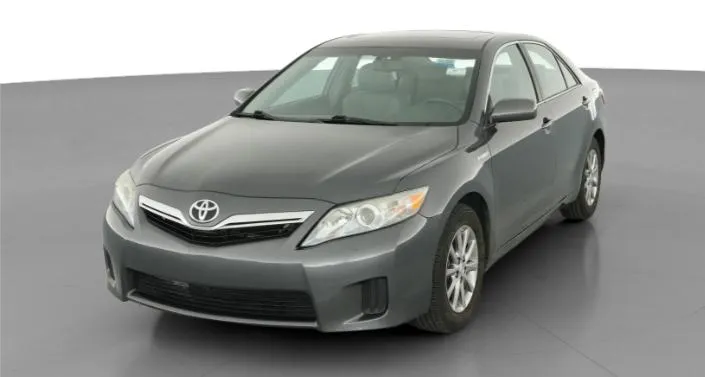
Example 1: 2012 Toyota Camry LE
Step 1: Determine retail value
- KBB Private Party (Good condition, 130K miles): $8,200
- NADA Clean Retail: $8,600
- Facebook Marketplace comps (5 similar listings): $7,800, $8,100, $8,500, $8,300, $7,900
- Average of comps: $8,120
- Working retail value: $8,300 (average of all sources)
Step 2: Estimate repair costs
- Front brake pads + rotors: $280
- Two rear tires: $250
- Detail (DIY supplies): $80
- Touch-up paint, new wipers, floor mats: $60
- Subtotal: $670
- 30% buffer: $201
- Total estimated repairs: $871
Step 3: Calculate maximum purchase price
- ($8,300 x 0.70) - $871 = $5,810 - $871 = $4,939
Step 4: The deal
- Listing asking price: $5,800
- Opening offer: $4,500
- Negotiated purchase price: $4,800
Step 5: Actual costs after purchase
- Purchase price: $4,800
- Title transfer + registration: $185
- Actual repairs (came in under estimate): $620
- Insurance (3 weeks of holding): $95
- Fuel (pickup, test drives, delivery): $40
- Total invested: $5,740
Step 6: The sale
- Listed at: $8,500
- Sold for (after negotiation): $7,900
Net profit: $7,900 - $5,740 = $2,160
Time invested: approximately 14 hours over 3 weeks. Effective hourly rate: $154/hour.
Example 2: 2014 Honda CR-V EX
Step 1: Determine retail value
- KBB Private Party (Good condition, 115K miles): $11,400
- NADA Clean Retail: $11,800
- Facebook Marketplace comps (6 similar listings): $10,900, $11,200, $11,500, $11,900, $10,800, $11,300
- Average of comps: $11,267
- Working retail value: $11,400
Step 2: Estimate repair costs
- AC recharge: $150
- Serpentine belt: $120
- Headlight restoration: $25
- Full detail (DIY): $100
- Subtotal: $395
- 30% buffer: $119
- Total estimated repairs: $514
Step 3: Calculate maximum purchase price
- ($11,400 x 0.70) - $514 = $7,980 - $514 = $7,466
Step 4: The deal
- Listing asking price: $8,500
- Opening offer: $7,000
- Negotiated purchase price: $7,200
Step 5: Actual costs after purchase
- Purchase price: $7,200
- Title transfer + registration: $210
- Actual repairs: $480
- Insurance (2 weeks of holding): $65
- Fuel: $35
- Total invested: $7,990
Step 6: The sale
- Listed at: $11,900
- Sold for (after negotiation): $11,200
Net profit: $11,200 - $7,990 = $3,210
Time invested: approximately 12 hours over 2 weeks. Effective hourly rate: $268/hour.


Notice the pattern in both examples: the 70% rule created a purchase ceiling, the actual purchase came in below that ceiling, and the final profit was healthy even after all costs. That margin of safety is exactly what the formula is designed to provide. For more guidance on which specific vehicles produce the best flip margins, see our guide on the best cars to flip for profit.
Common Pricing Mistakes
1. Overestimating the Sell Price
This is the most expensive mistake in car flipping. You find a car that works beautifully at a $9,000 retail value — but realistic retail is $7,500. You buy at a price that only makes sense if you can sell for $9,000, and then reality hits. Always use the conservative average of your valuation sources, not the highest number.
2. Underestimating Repair Costs
A car that "just needs brakes" might also need rotors, a caliper, and a brake line. A car that "runs great" might have a slow oil leak that costs $400 to fix. Always inspect thoroughly, always get specific cost estimates for each repair, and always apply the 30% buffer. The buffer is not optional — it is what keeps you profitable when surprises happen.
3. Ignoring Holding Costs
Every week you hold a car costs money: insurance, depreciation, opportunity cost of your tied-up capital. A car that takes 6 weeks to sell instead of 2 weeks might cost you $300-$500 in additional holding costs. Factor this into your pricing and your go/no-go decision. If a car is likely to sit for a month (niche model, winter season for a convertible), you need a wider margin to compensate.
4. Ignoring Time Value
Your time has a dollar value. If a flip requires 30 hours of repair work to make $1,200 in profit, your effective hourly rate is $40/hour. If you could make $1,000 on a cosmetic-only flip in 8 hours, that is $125/hour. The math-heavy approach to flipping means comparing not just total profit, but profit per hour invested. Sometimes the smaller-profit, faster-turnaround deal is the better one.
5. Anchoring to Purchase Price Instead of Market Value
You bought a car for $5,000 and put $1,000 into repairs. You feel like you "need" to sell it for at least $7,500 to make it worthwhile. But the market says cars like this sell for $6,500. The market does not care what you paid. Price based on comps, not based on what you need to recoup. If the numbers show a loss, take the loss quickly rather than holding a depreciating asset for months hoping for a buyer who will overpay.
6. Not Checking Comps Before Buying
Running KBB takes 2 minutes. Checking Facebook Marketplace comps takes 5 minutes. Spending 7 minutes on research before making a $5,000 purchase decision is not optional — it is the minimum. Flippers who skip this step and "go by feel" are the ones who end up underwater on deals.
Never Miss an Underpriced Listing Again
CarSnipe monitors Facebook Marketplace around the clock and sends you instant Telegram alerts when vehicles matching your search criteria are listed. Set your max price, and you will only see deals that fit your budget. 7-day free trial — cancel anytime before you are charged.
Frequently Asked Questions
The 70% rule states that you should pay no more than 70% of a vehicle's retail value minus estimated repair costs. For example, if a car has a retail value of $7,000 and needs $800 in repairs, your maximum purchase price is ($7,000 x 0.70) - $800 = $4,100. This formula builds in enough margin to cover holding costs, transaction fees, and profit. It is widely used by experienced car flippers as a quick go/no-go calculation before pursuing a deal.
Use multiple sources to triangulate the retail value: KBB (Kelley Blue Book) private party value, NADA clean retail value, and actual Facebook Marketplace listings for the same make, model, year, and similar mileage in your area. CarGurus instant market value is another useful reference. Take the average of these sources for the most accurate estimate. Always use private party values, not dealer retail, since you are selling as a private party.
Common repair costs for flip vehicles include brakes ($150-$400), tires ($400-$800 for a set), alternator ($200-$400), AC recharge or repair ($100-$600), timing belt ($300-$700), and battery ($100-$200). For cosmetic-only flips, budget $100-$300 for detailing and minor touch-ups. Always add a 30% buffer to your repair estimate to account for unexpected issues discovered after purchase. If total estimated repairs exceed 20-25% of the vehicle's retail value, the deal is likely too risky.
Price your flip listing 5-10% above your target sell price to leave room for negotiation. Most Facebook Marketplace buyers will offer below asking price, so building in negotiation room lets you accept an offer and still hit your profit target. Use pricing psychology — $4,900 feels significantly cheaper than $5,000 to buyers. Avoid pricing too far above market value, as this leads to a stale listing that signals desperation when you eventually drop the price.