
Car flipping on Facebook Marketplace is one of the most accessible side businesses you can start in 2026. The barrier to entry is low — you need market knowledge, a few thousand dollars in capital, and the ability to move fast when a deal appears. The hard part is not buying or selling. The hard part is finding underpriced cars consistently, before other flippers and bargain hunters grab them.
This guide breaks down exactly how to find underpriced car listings on Facebook Marketplace — why they appear, how to recognize them, which search strategies actually work, and how to make sure you see them before your competition does.

 Why Cars Get Listed Below Market Value
Understanding why cars end up underpriced is the foundation of sourcing profitable inventory. It is not random — specific, predictable situations create below-market listings. Once you learn to recognize these patterns, you will know exactly where to look and what to look for.
Motivated Sellers Who Need Cash Fast
This is the single most common source of underpriced cars. Life events create urgency that overrides a seller's interest in maximizing their sale price. Divorce settlements where both parties want to liquidate shared assets quickly. Job relocations where someone needs to sell before moving across the country next week. Financial emergencies where rent is due and the car is the fastest asset to convert to cash. Military deployments with a hard deadline to leave.
These sellers will price 15-30% below market value because their priority is speed, not profit. The telltale signs in listings: "need gone ASAP," "moving — must sell this week," "priced to sell fast," or a price reduction within days of the original posting. When you see these signals on a mechanically sound vehicle, you are looking at your best source of flip inventory.
Sellers Who Do Not Know Their Car's Value
Not everyone researches fair market value before listing their car. Many sellers guess based on what they paid, what they think the car is worth, or what a quick glance at other listings suggests. This guesswork frequently underprices high-demand, reliable models — especially Japanese makes like Toyota, Honda, and Subaru that hold value better than most sellers realize.
A seller who bought a Toyota Camry for $8,000 three years ago might list it at $5,500, assuming it depreciated significantly. In reality, used Camry prices have been stubbornly strong, and that car might be worth $7,500-$8,500 in the current market. The seller is not desperate — they just did not check. These listings are gold for flippers because the car is often in good condition (the seller was not motivated by problems with the vehicle).
Poor Photos and Bad Descriptions
A listing with dark, blurry photos taken in a cluttered garage gets a fraction of the views that a clean, well-lit listing receives. Facebook Marketplace's algorithm shows well-photographed listings to more people, which means poorly presented cars generate fewer inquiries, sit longer, and often get price reductions.
For flippers, this is an opportunity. A solid car with terrible photos is undervalued by the market — not because the car is bad, but because the presentation suppresses demand. You buy it at the reduced price, take proper photos, write a clean description, and relist it at fair market value. The vehicle itself did not change. The presentation did. That gap is your profit margin.
Listings with Minor Issues That Scare Casual Buyers
A car described as "needs new brake pads" or "AC needs a recharge" will scare off 80% of Facebook Marketplace buyers who want a vehicle they can drive home with zero work. But brake pads cost $150-$300 to replace, and an AC recharge runs $100-$200. If the listing price is discounted by $1,500-$2,000 because of these minor issues, you are looking at an excellent flip opportunity. The key is knowing which "issues" are cheap fixes and which are expensive problems — a distinction we cover in the red flags section below.
How to Spot Underpriced Listings
Finding underpriced cars requires a system, not luck. You need to know what fair market value looks like so you can instantly recognize when a listing is below it. Here is how to build that recognition.
Know Your Numbers Before You Browse
Before you start scrolling through Facebook Marketplace, pick 3-5 specific vehicles you want to flip (make, model, year range) and research their current market values on  Kelley Blue Book, Edmunds, and
  CarGurus. Write down the private party value for each at typical mileage in Good condition. These numbers are your benchmarks.
When you have these benchmarks memorized, scanning listings becomes fast. You see a 2017 Honda Accord with 85,000 miles listed at $11,500 and you instantly know if that is $2,000 below market or right at market — because you already did the research. This preparation is what separates flippers who find deals from flippers who waste hours browsing aimlessly.
Watch for Price Reduction Patterns
A listing that started at $9,500 and dropped to $7,800 within ten days tells a clear story: the seller overestimated demand, got few responses, and is now motivated to sell. The second price reduction — if it happens — is usually steeper and more desperate. Tracking price drops on your target vehicles gives you a pipeline of increasingly motivated sellers.
 CarSnipe Pro plan users can track price drops automatically and receive alerts when a listing you are watching reduces its price. This eliminates the need to manually revisit listings to check for changes.
Compare Against Recently Sold Listings
Facebook Marketplace does not show sold prices, but you can track what vehicles list for and how long they take to sell. If you have been monitoring a particular model for a few weeks, you develop a sense of the going rate in your area. A listing that appears 20% below what similar cars have been listing for — and selling at — is worth immediate investigation.
Look at Listing Age and Engagement
A freshly posted underpriced listing will sell fast. A listing that has been up for two weeks and is underpriced suggests something else — either there is a hidden problem, the seller is difficult to work with, or the listing is not reaching buyers (poor photos, bad keywords). All three scenarios can still be profitable if you investigate. Message the seller, ask questions, and find out why the car is still available at that price.
Best Search Strategies for Finding Deals
The way you search Facebook Marketplace directly affects the quality and quantity of deals you find. Most casual buyers use the default search and browse whatever shows up. Flippers need a more systematic approach.
Expand Your Search Radius
The default Facebook Marketplace radius is often set to a small area around your location. Expanding to 50-100 miles dramatically increases the number of listings you see — and increases the odds of finding underpriced cars in smaller towns and suburbs where there are fewer competing buyers. A 30-minute drive to pick up a car that is $1,500 below market is a profitable trade every time.
Search by Specific Make and Model
Do not browse "all cars under $10,000." That returns thousands of results and makes it impossible to quickly identify which ones are underpriced. Instead, search for specific vehicles: "Honda Civic 2015-2019" or "Toyota Tacoma 2016." When you know the fair market value for a specific model, you can scan results and instantly flag the deals. Run these searches for each of your 3-5 target vehicles daily.
Use Price Filters Strategically
Set your maximum price filter below market value for your target vehicle. If a 2017 Honda Accord in Good condition is worth $13,000 in your area, set your price filter to $11,000. Every result you see is automatically a potential deal — the filter does the first-pass screening for you. You will miss fairly priced listings, but you are not looking for fairly priced cars. You are looking for underpriced ones.
Check at High-Volume Times
New listings on Facebook Marketplace tend to spike during specific windows: Thursday and Friday evenings as sellers prepare for weekend showings, and Sunday evenings as weekend plans fall through and sellers decide to list. Checking during these windows gives you first access to fresh inventory. But checking manually has limits — which is why automated alerts provide a significant edge.


See Underpriced Listings Before Anyone Else
CarSnipe monitors Facebook Marketplace every 3 minutes and sends you an instant  Telegram alert when a new listing matches your search — make, model, year, price range, and location. While other flippers are manually refreshing their search, you are already messaging the seller. 7-day free trial — cancel anytime before you are charged.
install CarSnipe and stop refreshing Marketplace · View pricing
Using Alerts to Be First
The biggest challenge in finding underpriced cars to flip is not identifying them — it is seeing them before everyone else. An underpriced car on Facebook Marketplace does not stay underpriced for long. The best deals sell within one to three hours of being posted. If you are checking Marketplace twice a day, you are seeing yesterday's leftovers.
Why Speed Matters More Than Everything Else
Consider a 2018 Toyota Camry SE with 72,000 miles listed at $12,000 in a market where it is worth $15,500. That listing will get 10-15 messages within the first hour. The first person to message, show up, inspect the car, and hand over cash gets the deal. Everyone else gets "sorry, already sold." In car flipping, being second is the same as not seeing the listing at all.
This is why the most successful flippers do not rely on manual browsing. They use alert systems that notify them the moment a new listing appears. The time between a listing going live and your phone buzzing with the notification is the entire competitive advantage.
Setting Up Effective Alerts
CarSnipe lets you configure alerts for exactly the vehicles you want to flip. Set the make, model, year range, maximum price (set this below market value so every alert is a potential deal), and your search radius. When a matching listing appears on Facebook Marketplace, you receive a Telegram notification with the listing details and a direct link. Pro plan users get alerts every 3 minutes, which means you typically see new listings within minutes of posting.
The strategy for flippers is straightforward: set up alerts for your 3-5 target vehicles, each with a maximum price set 15-20% below fair market value. Every alert that comes through is pre-screened — it already meets your buying criteria. Your only job is to evaluate the listing, message the seller, and move fast. Before you commit to one, put a candidate car through the flip math so you know the spread survives reconditioning and fees.
Responding to Alerts Effectively
Getting the alert is step one. Converting it into a purchase requires a fast, professional response. Have a template message ready: introduce yourself, confirm the car is available, ask two or three key questions (any mechanical issues, reason for selling, flexible on price), and propose a time to see it — ideally within hours. Sellers respond to buyers who seem serious and ready to act. A vague "is this still available?" message gets deprioritized behind a buyer who says "I can come look at this today at 3pm with cash."
Which Price Ranges Have the Best Flip Margins
Not all price ranges are equally profitable for flipping. The sweet spot balances capital requirements, buyer demand, profit margins, and risk. Here is how each range breaks down for flippers in 2026.
Under $3,000: High Risk, Variable Reward
Cars under $3,000 carry the highest mechanical risk. At this price point, you are dealing with vehicles that have 150,000+ miles, deferred maintenance, and often cosmetic issues that limit resale appeal. The profit margins can be strong in percentage terms — buying a car for $1,500 and selling it for $2,800 is an 87% return — but the risk of buying a car that needs $1,000 in repairs before it is sellable is real. This range works best for flippers with mechanical skills who can do their own repairs.
$3,000 to $8,000: The Sweet Spot
This is where most successful flippers operate. Cars in this range are old enough to have depreciated significantly but new enough to be mechanically reliable with reasonable mileage (80,000-130,000 miles). The buyer pool is massive — this is the most popular price range for private party used car purchases. Typical flip margins run 25-40% on a well-bought vehicle.
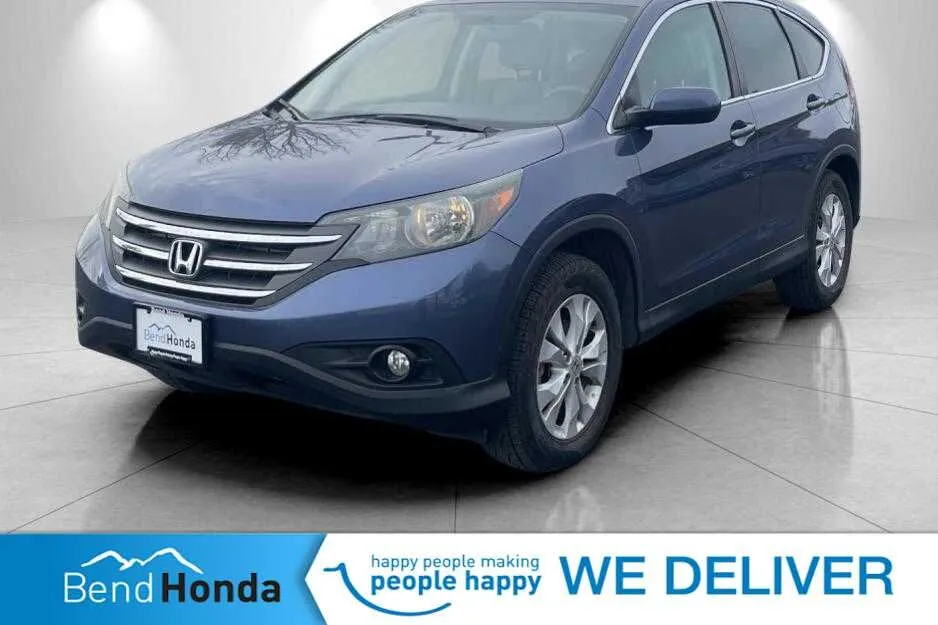
Target models in this range: Honda Civic (2013-2017), Toyota Corolla (2014-2018), Honda CR-V (2012-2016), Toyota Camry (2013-2017), Hyundai Sonata (2015-2018), and Mazda3 (2014-2018). These are high-demand, reliable vehicles that sell quickly at fair market value. When you find one underpriced, you have a flip that will move within a week of relisting.

$8,000 to $15,000: Solid Margins, More Capital
This range offers good margins but requires more capital per flip, which limits how many vehicles you can have in inventory at once. The vehicles here are newer, lower-mileage, and generally in better condition — which means less repair risk but also a more discerning buyer who expects more from a listing. Your photos need to be excellent, your description thorough, and your pricing competitive.
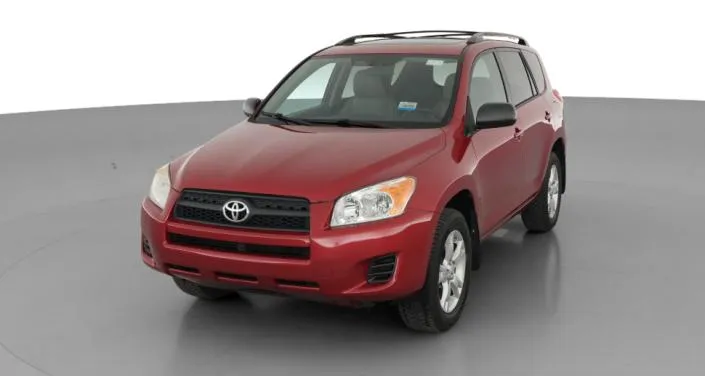
Popular flip targets in this range include trucks (Tacoma, F-150, Silverado), which consistently hold value and have strong resale demand, and popular SUVs (RAV4, CR-V, Highlander) that families actively seek out. A well-bought truck in this range can yield $2,000-$4,000 in profit per flip.
Above $15,000: Lower Margins, Slower Sales
Above $15,000, the private party market becomes more competitive with dealers, and your buyer pool shrinks. Buyers spending this much are more likely to want financing (which private sellers cannot offer), more likely to shop at dealerships for warranty coverage, and more cautious about the transaction. Flip margins compress to 10-20%, and vehicles take longer to sell. Unless you have deep capital and can afford to hold inventory for 2-4 weeks, the sub-$8,000 and $8,000-$15,000 ranges are more efficient.
Red Flags to Avoid
Not every underpriced car is a deal. Some are underpriced because they have problems that make them unsellable at any reasonable price. Learning to distinguish genuine deals from money pits is essential for profitable flipping.
Salvage and Rebuilt Titles
A salvage or rebuilt title means the vehicle was declared a total loss by an insurance company — typically due to a major accident, flood, or theft recovery. These vehicles sell for 20-40% below clean title equivalents, and that discount exists for good reason. Salvage title cars are harder to insure, impossible to finance through most lenders, and significantly harder to resell. Unless you are an experienced mechanic who can verify the rebuild quality personally, avoid salvage title vehicles for flipping. The resale market for them is small and the margins rarely justify the risk.
Transmission and Engine Problems
Any listing that mentions transmission slipping, rough shifting, engine knocking, overheating, or head gasket issues is describing a repair that costs $1,500-$5,000+. These are not quick fixes — they are major mechanical work that can easily erase your entire profit margin. A car listed cheap because "the transmission acts up sometimes" is not an opportunity. It is someone else's expensive problem being passed along.
Prices That Are Too Good to Be True
A 2020 Honda Civic with 40,000 miles listed at $6,000 is not an underpriced deal — it is a scam. Listings priced 40-60% below market value with stock photos, vague descriptions, and sellers who want to communicate only through email or text (not Facebook Messenger) are almost always fraudulent. Legitimate underpriced listings are 15-25% below market, not 50%. If a price seems impossibly good, it is.
Flood and Water Damage
Flood-damaged vehicles are among the worst purchases for flippers. Water damage causes electrical problems, mold, corrosion, and mechanical failures that can appear weeks or months after purchase. Check for water lines in the trunk, musty smells, sand or silt in crevices, and mismatched carpet. Run a vehicle history report — flood damage is usually recorded. Cars from states recently affected by hurricanes or major flooding deserve extra scrutiny even if the title is clean.
Excessive Rust
Surface rust is cosmetic. Structural rust — on frame rails, rocker panels, subframes, and suspension mounting points — is a deal-breaker. A car with structural rust is expensive to repair, difficult to pass inspection in many states, and hard to resell. Vehicles from salt-belt states (Ohio, Michigan, Pennsylvania, upstate New York) are particularly prone to underbody rust. Always inspect the undercarriage, or pay a mechanic $100-$150 for a pre-purchase inspection that includes it.
Missing or Unclear Title Situation
Never buy a car without a clear title in the seller's name. "I have the title but it is in my ex's name," "the title is at my other house," or "I can get the title to you next week" are all red flags that can leave you with a vehicle you cannot legally register or resell. A clean title in the seller's name, matching their ID, is non-negotiable for any flip purchase.
Profitable car flipping comes down to three things: knowing fair market value so you recognize underpriced listings instantly, having a system that shows you new listings before competing buyers, and moving fast when a deal appears. The flippers who make consistent money are not luckier than everyone else — they are faster and more prepared. Set up alerts for your target vehicles at below-market prices, respond to listings within minutes, and always verify the vehicle before buying. The deals are there every day. The question is whether you see them first.
Frequently Asked Questions
The most reliable method is to set up automated alerts that notify you the moment a new listing appears below your target price. Underpriced cars sell within hours — often minutes — so manual browsing puts you at a disadvantage against buyers using alert tools. Combine alerts with knowledge of fair market value (from KBB, Edmunds, and CarGurus) so you can instantly recognize when a listing is priced 15-30% below market. Focus on motivated seller signals like "need gone today," recently reduced prices, and listings with poor photos that hide a solid vehicle.
The $3,000 to $8,000 purchase range offers the best margins for most flippers. Cars in this range are affordable enough that you are not tying up large amounts of capital, the buyer pool is enormous (most private party buyers shop in this range), and the percentage margins are typically 25-40% on a well-bought vehicle. Below $3,000, you encounter more mechanical risk and harder resale. Above $10,000, your buyer pool shrinks and the capital required limits how many flips you can run simultaneously.
Several common situations create underpriced listings. Motivated sellers who need cash quickly — due to moving, divorce, financial pressure, or buying a new car — will price below market to sell fast. Sellers who do not research fair market value often guess a price based on what they paid or what they think it is worth, which frequently results in underpricing reliable, high-demand models. Listings with poor photos or vague descriptions also attract fewer buyers, reducing competition and sometimes prompting the seller to lower the price further.
The limit varies by state. Most states allow between 2 and 5 title transfers per year for private individuals before requiring a dealer license. Some states like California allow up to 5, while others like Pennsylvania allow only 4. A few states have no explicit limit but will flag frequent title transfers. Check your state DMV regulations before starting. If you plan to flip more than your state allows, you will need a dealer license, which typically requires a physical lot, a surety bond, and passing a dealer exam.
Find Flip-Worthy Deals Before the Competition
CarSnipe sends you instant Telegram alerts when underpriced cars matching your criteria appear on Facebook Marketplace. Set your target make, model, and maximum price — and get notified within minutes of new listings. The fastest flipper wins the deal. 7-day free trial — cancel anytime before you are charged.