
Every flipper eventually buys the car with the story. The seller swears the check engine light was "just an old oxygen sensor" and it went off on its own last week.
You hand over cash, drive it home, and two days later the light is back with a P0420 and a catalytic converter quote that erases your margin.
An OBD-II scanner is the cheapest insurance against that. It costs less than one bad decision and it lives in your glovebox. Used properly it also does something most buyers never manage: it tells you whether the seller cleared the computer an hour before you got there.
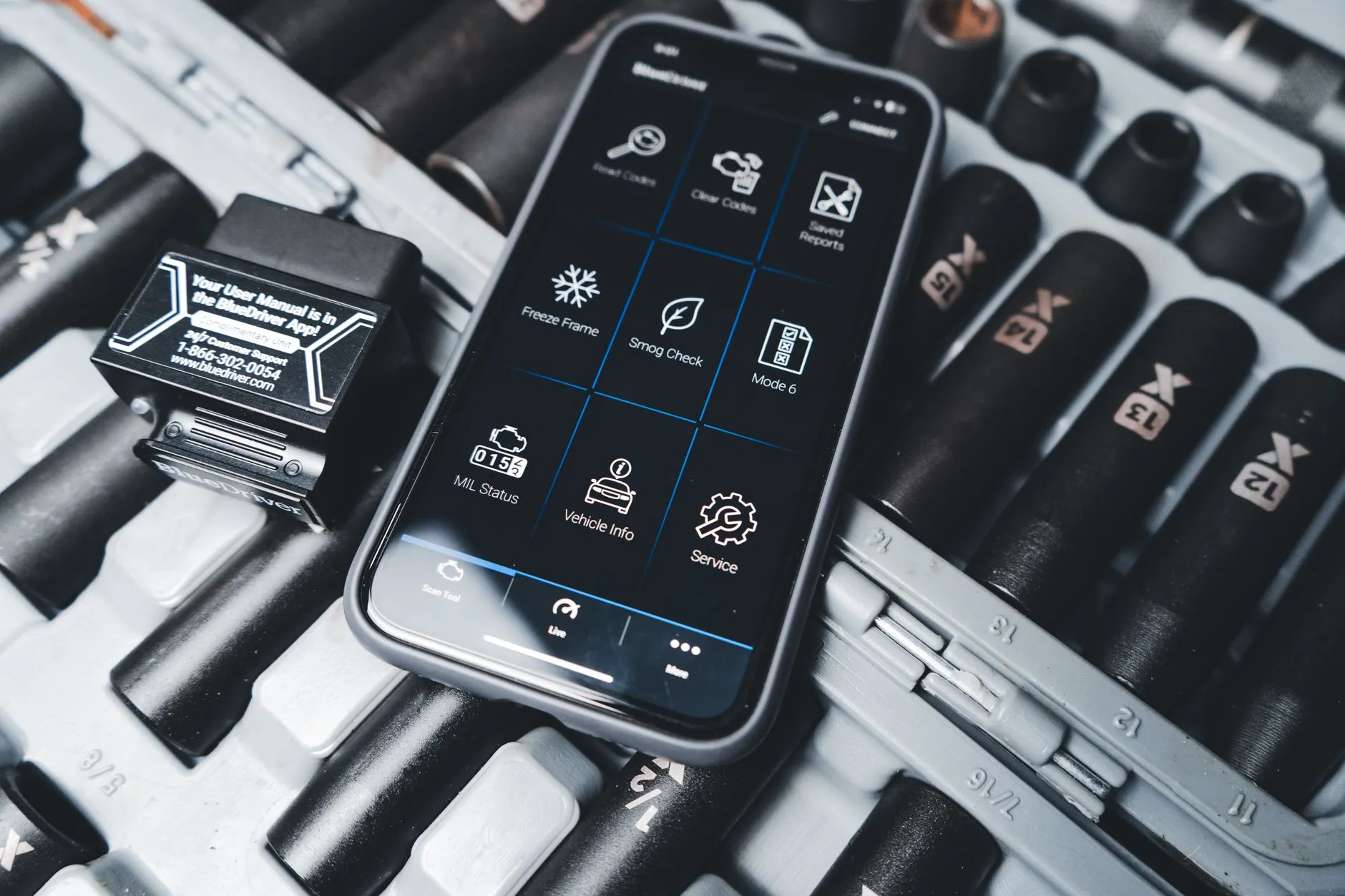
Is an OBD2 Scanner Worth It for Flipping Cars?
Yes, and usually on the first car. A scanner costs less than one stored transmission fault or a hidden airbag light, and either of those turns into a four-figure problem after the money has changed hands. It also hands you something concrete to negotiate against. For anyone buying used cars to resell, it is the cheapest insurance in the kit.
The math here is not complicated. A transmission fault stored in a module you never checked is a four-figure problem. A pending misfire code on a cylinder that runs fine at idle becomes obvious the first time the new owner merges onto a highway.
An airbag light that the seller hid by pulling a bulb is a failed safety inspection in a lot of states and a liability you do not want attached to a car you resold.
None of those show up in a test drive around the block. All of them show up in a full-system scan that takes under ten minutes in the seller's driveway. The scanner earns its keep fastest on the high-volume stuff, so it is worth pairing with the models that flip most reliably.
There is a second payoff that flippers notice faster than the first. A code you can read out loud, with a repair cost you can quote, changes the shape of a negotiation.
"It needs work" invites an argument. "It has a stored P0171 on bank one and the long-term fuel trim is sitting at plus 22 percent, so that is an intake leak, call it 300 dollars" usually ends one.
The Readiness Monitor Trick Most Buyers Never Use
A clean dashboard is not evidence of a clean car, and this is the screen that shows the difference.
When someone clears trouble codes, the check engine light goes out and the stored codes disappear. What does not disappear is the state of the emissions readiness monitors.
Your car's computer runs a set of self-tests covering the catalyst, oxygen sensors, evaporative system, and several others, and each one reports as ready or not ready. Clearing codes resets every one of them to not ready.
Those monitors only flip back to ready after the car completes a full drive cycle, which in practice means somewhere in the range of 50 to 100 miles of mixed city and highway driving over several trips. There is no way to fake it and no way to rush it.
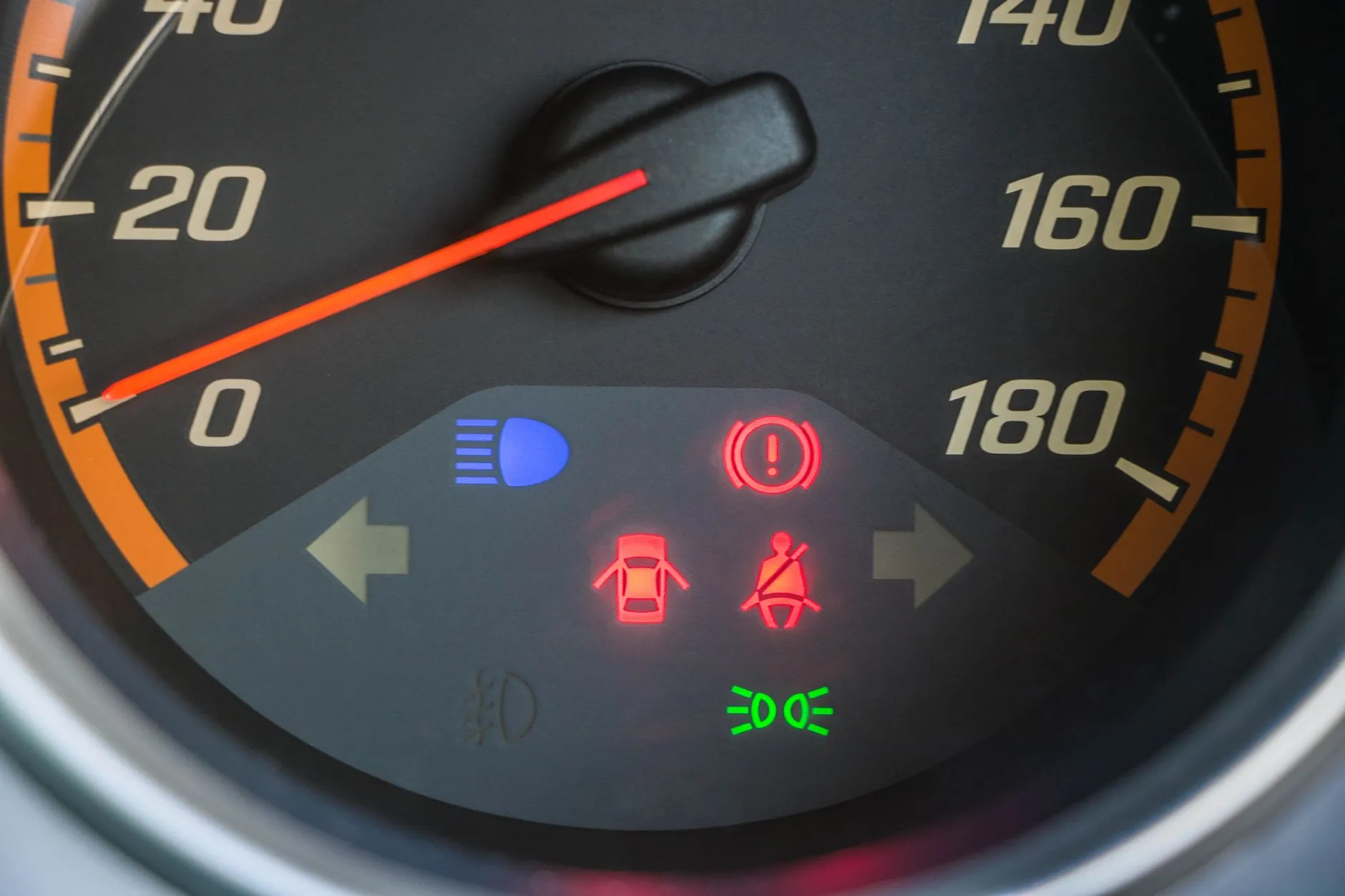
So you pull up on a Saturday morning to look at a daily-driven sedan with 140,000 miles, the dash is clean, and your scanner reports that four of the seven monitors are incomplete.
That car did not roll off a lot yesterday. Somebody plugged in a code reader recently, and the only reason to do that before a sale is to make something go away.
Most scanners will also show you distance travelled since codes were cleared. When that number reads 12 miles, the conversation is over. Either the seller explains what was cleared and why, or you walk. This one screen has saved flippers more money than every other feature on the tool combined, and almost nobody checks it.
What Should You Look for in an OBD2 Scanner for Flipping?
Full-system scanning is the feature that matters. A reader that only queries the engine module misses ABS, airbag and most transmission faults, which is exactly where the expensive surprises hide. After that, look for readiness monitor status, live data, and a tool that works without a subscription. Bidirectional control is useful, but you rarely need it to make a buying decision.
Full-system scanning, not engine codes only. This is the dividing line between a tool that helps and a tool that lies by omission. Cheap readers query the engine control module and stop there.
ABS faults, airbag faults, and a lot of transmission faults live in other modules and never trigger a check engine light. If the product page says "reads and clears engine codes" without mentioning ABS and SRS, it will miss the expensive problems.
Readiness monitors. Covered above. Nearly every scanner supports this because it is part of the OBD-II standard, but the good ones put it one tap from the home screen instead of burying it.
Live data with graphing. Fuel trims, coolant temperature, misfire counters per cylinder, and oxygen sensor voltages tell you what is happening right now rather than what set a code last month. Long-term fuel trims are the most useful single number a flipper can learn to read.
A phone app that explains the code. Reading P0300 is easy. Knowing that P0300 on a specific engine family usually means coil packs and not something worse is what saves you. Tools that map codes to reported fixes are worth more than tools that just print the number.
Protocol coverage that matches what you buy. Basic OBD-II works on everything sold in the US since 1996. Newer vehicles are a different story. The latest GM, BMW, and Stellantis models communicate over DoIP, and CAN FD is now common as well.
If your buy box includes cars from the last few years, confirm the tool speaks both. If you flip 2005 to 2015 Hondas and Toyotas, you do not need to care.
No subscription, or an honest one. Several manufacturers sell the hardware cheap and charge annually for the software that makes it useful. That is fine if you know going in. It is unpleasant to discover in year two.
Which OBD2 Scanner Should I Buy for Flipping Cars?
Buy the cheapest scanner that reads every module rather than just the engine. Budget tools cover basic codes and readiness monitors, which is enough for most curbside checks. The middle tier adds full-system scans across ABS, airbag and transmission, and that is where most flippers should land. Professional units add bidirectional tests you will seldom need for a buying decision.
A note before the list: prices in this category move constantly and these tools go on sale often, so check the current price rather than trusting a number in an article. The tiers below describe what you get, not what you will pay on any given day.
Best for most flippers: BlueDriver Bluetooth Pro
If you buy one tool and never think about it again, this is the one. The BlueDriver Bluetooth Pro is a dongle that pairs with your phone and does full-system scanning across engine, transmission, ABS, and airbag modules on most makes.
It reads live data, handles readiness monitors, and its repair reports match your specific code and vehicle against fixes that actually worked on that platform. There is no subscription.
It sits around the 100 dollar mark, which is the right amount of money for a tool that lives in your car and gets used on every inspection. The app is polished enough that you can hand your phone to a seller and have the conversation stay civil.
Best cheap tool that still does the job: ANCEL BD310
The ANCEL BD310 has a dual design worth understanding: it works as a standalone handheld display and as a Bluetooth adapter for your phone. That matters more than it sounds. Handing a seller a small dedicated device reads as routine, while pulling out your phone and an app sometimes reads as an accusation.
It typically runs around 60 dollars. If you want to spend less, the ANCEL BD200 covers all OBD-II modes at a lower price, though you give up the dual display design.
Most capability under 100 dollars: TOPDON TopScan
The TOPDON TopScan is a Bluetooth dongle that punches above its price. It does full-system diagnostics, active tests, and a set of maintenance service functions like oil reset and electronic parking brake retraction, which is unusual at this level and useful the moment you start doing your own reconditioning.
For flippers who buy anything built in the last few years, the TOPDON TopScan Master adds DoIP support, the protocol the newest GM, BMW, and Stellantis vehicles require. Most sub-150 dollar tools cannot talk to those cars at all.
When you start fixing cars yourself: XTOOL D7S
Once you are repairing what you buy instead of just buying around problems, bidirectional control stops being a luxury. The XTOOL D7S sends commands back to the vehicle so you can trigger actuators, cycle an ABS pump to bleed brakes properly, and run component tests instead of guessing.
It includes CAN FD, ECU coding on European vehicles, a long list of service functions, and several years of software updates in the box.
This is a several-hundred-dollar tool and it is the wrong first purchase. It is the right second one, usually around the time you stop paying a shop 150 dollars an hour to do things you could do in your own driveway.
Professional tier: THINKSCAN 689BT
The THINKSCAN 689BT is a wireless tablet-style bidirectional scanner aimed at people running enough volume that the tool is a business expense rather than a purchase.
If you are moving several cars a month and doing your own work, the coverage breadth and the freedom to walk around the vehicle without a cable start to justify the price. If you are doing four flips a year, it does not.
A word on ten-dollar ELM327 clones
You will see generic dongles for the price of lunch. Some of them work. Many use counterfeit chips with partial protocol support, which means they connect to the engine module, report nothing else, and drop the pairing halfway through a scan.
A few keep drawing current after the key is off and will kill a battery over a weekend, which is a memorable way to fail an inspection on a car you were about to buy. On a tool you use to decide whether to spend thousands of dollars, this is a bad place to economize.
 Find the Car Before You Inspect It
A scanner tells you whether a car is worth buying. CarSnipe tells you the car exists. It checks  Facebook Marketplace every 3 minutes on Pro and sends
  Telegram alerts when it finds a vehicle matching your make, model, and price range, so you can be messaging the seller sooner. It runs in your browser, so the computer has to stay on and awake.
The Rest of the Inspection Kit
A scanner covers the electronics. The rest of the car needs about five more items, none of them expensive, all of them fitting in a small bag you keep in the trunk.
If you want the full walkthrough of what to check and in what order, our used car inspection checklist covers the physical side in detail.
Paint thickness gauge. The fastest way to find bodywork the seller did not mention. Factory paint falls in a fairly narrow thickness band, and a repainted panel reads noticeably higher.
Walk the car, take a reading on each panel, and a repaired quarter panel announces itself in about 90 seconds. A basic paint thickness gauge is inexpensive and catches accident history that never made it onto a Carfax report.
Tire tread depth gauge. Four tires is a real number on a flip budget, and uneven wear across a single tire points at alignment or suspension problems that cost more than the tires. A tread depth gauge costs almost nothing and turns a vague "tires are okay" into a measurement.
Portable jump starter. Two uses. You will eventually go look at a car that has been sitting, and the ability to start it yourself is the difference between an inspection and a wasted drive.
It also tells you something: a car that needs a jump has either a dying battery, a parasitic draw, or a charging problem, and knowing which one matters. A lithium jump pack lives in the trunk and gets used more than you would expect.
OBD-II extension cable. Small thing, real annoyance solved. Some ports are jammed above the pedals where you cannot see the scanner screen while it works. A short extension cable lets you sit in the driver's seat with the tool in your lap instead of upside down in the footwell.
Inspection light and a telescoping magnet. A bright rechargeable inspection light shows you fluid leaks, rust in wheel wells, and overspray in door jambs that daylight hides. The magnet finds body filler: it sticks to steel and it does not stick to bondo.
How Do You Scan a Car Before Buying It?
Plug in before you start the engine, read stored codes first, then check readiness monitors, and clear nothing. Monitors sitting in a reset state tell you the seller wiped codes recently, which is often worth more than the codes themselves. Photograph every screen. The sequence takes about ten minutes, and it goes better before the seller has time to get defensive.
Order matters here, because you want the most revealing information before the seller has time to get defensive.
1. Plug in with the key on and the engine off. The port is under the driver-side dash, usually within a foot of the steering column. Key to ON wakes every module without the noise and vibration of a running engine.
2. Read the readiness monitors before anything else. This is your cleared-codes detector and it takes fifteen seconds. Check distance since codes cleared at the same time if your tool reports it.
3. Pull stored and pending codes. Pending codes are faults the computer has seen once but not confirmed. They are early warnings, and sellers almost never know they exist because they never triggered a light.
4. Run the full-system scan. Let it query every module. This is where ABS and airbag faults surface, and it is the step engine-only readers cannot do.
5. Start it and watch live data. Let the engine reach operating temperature. Watch long-term fuel trims on each bank, coolant temperature, and misfire counters. Trims beyond roughly plus or minus 10 percent mean the engine is compensating for something. Misfire counts climbing on one cylinder at idle mean a coil, plug, or worse.
6. Screenshot everything. Save the scan before you unplug. If you buy the car, you have a baseline. If you walk, you have a record of why, which is useful when the same car reappears on Marketplace three weeks later at a lower price.
Turning Codes Into Negotiating Room
A scan result is only worth what you do with it. The flippers who get the most out of a scanner treat it as a pricing instrument rather than a pass-fail test.
Look up the repair cost while you are standing there. Most codes have a well-documented typical fix and a known parts price for the specific engine.
Turn each finding into a line item, add them up, and present the total as a deduction rather than a reason the car is bad. Sellers defend their car. They negotiate against a number.
Be honest about which codes you can absorb. A flipper who does their own work can buy the P0171 car cheap and fix it for the price of an intake gasket. A flipper who pays a shop cannot.
Knowing your own repair capability is what turns a scan into an advantage instead of a reason to walk away from every car you see. Our guide on pricing a car to flip covers how to fold repair estimates into your buy number.
One thing to avoid: clearing codes yourself during an inspection. You lose the evidence, you reset the monitors, and you have just done the seller a favor at your own expense.
What Will an OBD2 Scanner Not Tell You?
A scanner reads what the car's computers know, and plenty of expensive problems never reach a module. Rust, frame damage, worn suspension, a tired clutch, and an automatic that still shifts but is on its way out are all invisible to it. It says nothing about accident history or a branded title either. Treat it as one input, not the whole inspection.
A scanner reads what the car's computers know. Plenty of expensive problems are invisible to every module in the vehicle.
Rust is the big one. Frame rot and rotted rocker panels do not set codes, and on a lot of northern cars that is the difference between a flip and scrap value. Get under the car with a light.
Suspension is the second. Tired shocks and a failing wheel bearing get felt on a drive and never read on a screen, and the same goes for a clutch nearing the end of its life or a headliner that has started to sag.
Then there is everything a scan tool has no opinion about at all: bodywork quality, panel gaps, title status, and whether the VIN on the dash matches the VIN on the door jamb.
You need an opinion on all four. The pre-purchase inspection guide walks through the parts of a car that no electronic tool can evaluate.
Treat the scanner as one instrument among several. It happens to be the one that catches the specific category of problem sellers most often try to hide, which is why it earns its place in the bag.
Hear About Deals Sooner
The best-inspected car in the world does you no good if someone else bought it three hours ago. CarSnipe checks Facebook Marketplace every few minutes while your computer is on and pings your Telegram when it finds a match, so you can get to more cars before other buyers do.
Frequently Asked Questions
They can hide the light, but not the evidence. Clearing codes with a cheap reader turns the dashboard light off and wipes stored trouble codes, and it also resets the I/M readiness monitors to an incomplete state. Those monitors only return to "ready" after the car completes a specific drive cycle, which usually takes 50 to 100 miles of mixed driving. So if you scan a car that has obviously been driven and half the monitors read not ready, the computer was cleared recently. On most cars you can also read the number of miles since codes were last erased, which makes the timing hard to argue with.
Not for buying. A bidirectional tool sends commands back to the car so you can activate a fuel pump, cycle an ABS pump, or run an actuator test, which matters when you are diagnosing and repairing a vehicle yourself. For pre-purchase inspections, what you actually need is full-system code reading, readiness monitors, and live data, and a good Bluetooth dongle under 100 dollars covers all three. Buy a bidirectional tool when you start doing your own reconditioning work, not before.
The 10 dollar generic ELM327 clones are a gamble. Many use counterfeit chips with incomplete protocol support, so they connect to the engine module and nothing else, drop the connection mid-scan, or report codes that do not match what a real tool reads. Some also draw power continuously and will flatten a battery if you leave them plugged in. If you are inspecting cars you intend to put money into, a known-brand dongle from a company that maintains its own app is worth the difference.
Basic engine code reading works on essentially every car sold in the United States from 1996 onward, because OBD-II is a federal standard. Everything beyond that is manufacturer-specific. Full-system access to ABS, airbag, and transmission modules varies by brand and by tool, and the newest vehicles from GM, BMW, and Stellantis use a newer communication protocol called DoIP that older scanners cannot speak at all. Check the coverage list for the makes you actually buy before choosing a tool.
Most flippers are well served somewhere under 100 dollars. At that level you get full-system scanning, readiness monitors, live data, and a phone app that explains what the codes mean, which is everything a pre-purchase inspection needs. One walked-away deal on a car with a hidden transmission fault pays for the tool several times over. Spending 300 dollars or more only makes sense once you are repairing cars yourself and need bidirectional control and service functions.