
On Facebook Marketplace, the best-priced used cars don't sit. A clean, fairly-priced vehicle posted this morning can have three serious buyers messaging by lunch, and the seller usually sells to whoever shows up first with cash in hand. That speed is exactly why a systematic inspection matters more here, not less — you often have to evaluate a car the same day it's listed and decide on the spot, without letting the rush talk you past a $3,000 problem. This checklist is built for that: a fast, repeatable walkthrough you can run on your phone the moment you're standing in front of the car, so you can move on a genuine deal and walk away from a bad one before any money changes hands.
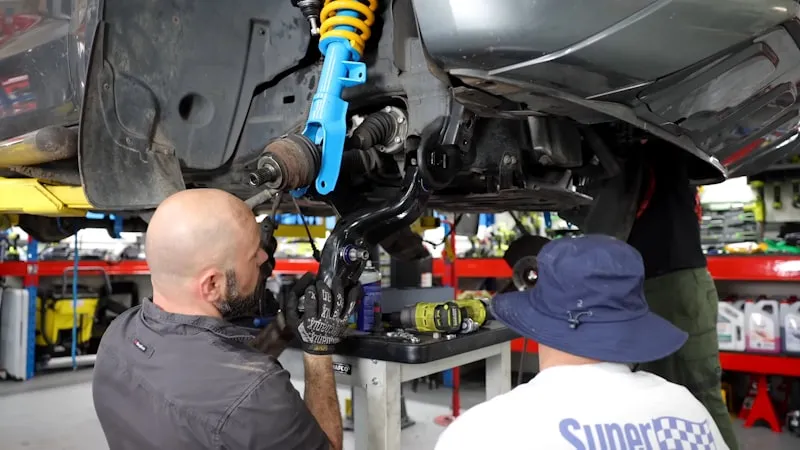
This guide gives you 35 specific items to inspect, organized by category, that a trained mechanic would examine during a professional pre-purchase inspection. You don't need any special tools to complete most of this list. What you need is a methodical approach and the willingness to take the time. Do this before paying and you protect yourself from expensive surprises — and give yourself concrete leverage to negotiate on anything you find. To make sure you see the best listings before other buyers, set up instant Facebook Marketplace car alerts so you can schedule inspections while the car is still available.
Last updated: June 2026
Use your browser's print function (Ctrl+P / Cmd+P) to save this checklist as a PDF. Take it with you to every private seller inspection.
When the Alert Fires: Your First 10 Minutes
If you're catching listings the moment they post, the inspection really starts before you leave the house. The gap between a good car going live and a buyer committing to it is often a couple of hours, so what you do in the first ten minutes after the notification decides whether you even get a shot at it. Here's the triage worth running before you drive anywhere:
- Message first, ask questions second. A short, specific opener — "Is the 2018 CR-V still available? I can come look today, cash in hand" — puts you at the front of the line. Sellers remember the buyer who was ready, not the one who fired off twelve questions over two days. If you keep losing cars at this stage, it's worth understanding why you keep missing Marketplace car deals before you blame the prices.
- Ask for the VIN and a dashboard odometer photo immediately. A genuine seller sends both within minutes. While you wait, run the free NHTSA recall check and pull a VIN history report, so you arrive already knowing the accident and title picture instead of discovering it in the driveway.
- Sanity-check the price in two minutes. A quick search of the same year, make, model, and mileage on CarGurus tells you whether this is genuinely underpriced or just bait. A price well below the going rate is either your lucky morning or a reason to inspect twice as hard — either way, you want to know before you commit your afternoon to the drive.
- Screenshot the listing. Honest sellers re-edit listings; scammers quietly delete them. A screenshot preserves the original price, mileage, and description in case anything changes between the alert and your visit.
The buyers who consistently land these cars aren't the ones with the most mechanical knowledge — they're the ones who get there first and then inspect efficiently once they do. That speed advantage is the whole premise behind beating other buyers to Marketplace listings: the checklist below is what you run the moment you arrive, but it only matters if you're one of the first people the seller hears from.
How to Use This Checklist
This guide is designed to be used on-site. Pull it up on your phone before you walk up to the car and work through each section in order. A few things to keep in mind before you start:
- Note every issue, even small ones. A cracked plastic trim piece costs $40. A power window motor costs $250. A suspension clunk costs $400. Minor issues add up fast, and your list of findings is your negotiating position. Every item you document is a dollar amount you can take off the asking price.
- If a seller won't let you inspect properly, that's the answer. A seller who rushes you, limits your access to the engine bay, or refuses to let you drive on a highway is telling you something important. Legitimate sellers with nothing to hide welcome thorough inspections — it closes the deal faster.
- Never inspect in a dark garage or at night. Paint defects, rust, fluid leaks, and bodywork flaws are nearly impossible to spot in poor lighting. If the seller can only meet at night or insists on showing you the car indoors, push back or reschedule.
- A professional pre-purchase inspection is worth doing for any vehicle over $5,000. At $100–$150 from an independent mechanic, it's the single best money you'll spend in the car-buying process. Use this checklist to do your own assessment first — then have a mechanic put the car on a lift and confirm your findings before you finalize the deal.
Section 1: Before You Even See the Car
Five checks you can do from home, before investing time in a trip to see the vehicle. These either qualify or disqualify a listing before you show up.
- Run a VIN history report (Carfax or AutoCheck). This is non-negotiable for any vehicle you are seriously considering. A VIN report shows accident history, title history across states, reported mileage at each service event, and flags for odometer rollback anomalies. It costs around $40 and saves you from an entire category of expensive surprises. Note: a clean report is a positive signal, not a guarantee — some accidents never get reported. Use it in combination with everything else on this list.
- Verify the VIN matches across the title, dashboard, and door jamb. You can often get the VIN from the seller before arriving by asking them to photograph the dashboard VIN plate. Cross-reference it against the listing and the title. Any discrepancy between a VIN shown in the listing, on the title, and on the physical car is an immediate red flag for VIN cloning or title fraud.
- Check for open safety recalls at NHTSA.gov. This is completely free — enter the VIN at the National Highway Traffic Safety Administration's recall search tool. Open recalls on brakes, airbags, fuel systems, or steering components are safety issues that the seller may not disclose. Some recalls have been open for years on certain models. Knowing about them before you arrive gives you leverage and lets you assess whether the recall has been addressed.
- Look up the going market rate on CarGurus and Autotrader. Before you can negotiate, you need to know what comparable vehicles actually sell for in your area. Search the same year, make, model, trim level, and mileage range on both platforms. Note the range — private-party listings typically run 10–15% below dealer prices for the same vehicle. A price significantly below market may indicate hidden problems or a motivated seller. Either way, you want to walk in knowing the number.
- Read the full listing carefully and look for inconsistencies. Vague condition descriptions ("runs great, selling as-is"), text that contradicts the photos, listings where the car location doesn't match the seller's stated location, or descriptions that use copy-pasted generic language rather than specific details about this particular car — these are all signals worth noting before you invest time in a trip.
Section 2: Exterior
Exterior inspection is your first read on whether the car has been in an accident that wasn't disclosed. Do this in good natural light — overcast days actually work better than bright sun for spotting paint inconsistencies.
- Walk the full perimeter and check panel gaps. Stand at each corner of the car and sight down the body panels. Panel gaps — the spaces between the hood and fenders, doors and pillars, trunk lid and quarter panels — should be consistent and even all the way around. Gaps that widen or narrow, or panels that sit at different heights, are the most reliable visual indicator of past bodywork after a collision. Factory assembly lines produce remarkably consistent gaps; post-accident repairs rarely match that precision perfectly.
- Check paint for mismatched texture or shade. Look along the body panels from a shallow angle, with your eye close to the surface. Factory paint has a consistent texture and depth. Repainted panels often show a slightly different texture — either smoother (sprayed over the factory texture) or slightly rough (the repair coat). Under direct light, you can often see where one paint zone ends and another begins. Also check for color shade differences between adjacent panels.
- Look for overspray on rubber seals, trim, and glass edges. When a body shop repaints a panel, they mask off adjacent surfaces — but rarely perfectly. Look for fine paint mist on rubber door seals, window trim, plastic moldings, and along the edges of glass. Any overspray in these areas confirms the car had paintwork done. Combined with an accident not shown on the VIN report, this becomes a more significant concern.
- Check door hinges for sagging. Open each door fully and watch how it moves when you release it. A door that drops significantly when opened — rather than staying level — indicates the hinge pins are worn or the door has been re-hung after damage. On older vehicles, some hinge wear is expected. On anything under ten years old, sagging doors deserve scrutiny.
- Inspect all glass for chips, cracks, or non-OEM replacement. Chips and small cracks are common and often negotiable, but a crack that extends into the driver's sightline is a safety issue and a failed inspection in most states. Also check the corner markings etched into the glass — original manufacturer glass has OEM brand markings. Aftermarket replacement glass typically says "FYG," "XYG," or similar. Replaced glass isn't necessarily a problem, but unreported glass replacement from an accident is worth noting.
- Check all four tires — tread depth, wear pattern, and age. Do the penny test on each tire: insert a penny head-down into the tread grooves. If you can see the top of Lincoln's head, the tread is at or below the minimum safe depth. Beyond tread depth, check the wear pattern: even wear across the full tread face is normal. Wear concentrated on the outer or inner edges indicates alignment or suspension issues that will need correction. Finally, check the sidewall date code — four digits molded into the side of the tire indicate the week and year of manufacture (e.g., "2819" = 28th week of 2019). Tires over six years old should be replaced regardless of how much tread remains — rubber degrades from age and UV exposure.
- Inspect wheel wells for rust or damage. Get low and look into each wheel well. Surface rust on the inner fender liners is common on older vehicles in northern states. Flaking or structural rust on the wheel well edges, or damage to the plastic liners that suggests an impact, is more concerning. Significant rust in the wheel wells often indicates the same rust has progressed to the frame rails and floor pans.
- Look under the car for rust, leaks, and damage. Get down and look at the undercarriage. You are looking for three things: rust on the frame rails and structural members (surface rust is common; scale-off or penetrating rust is a structural concern), rust or holes in the floor pans (reach under and press on the floor from below — soft or flexible areas in a steel floor pan mean rust-through), and fresh oil or fluid spots on the ground directly under the engine or transmission. A car that has been sitting overnight should have a clean dry spot underneath it.
Section 3: Under the Hood
You don't need to be a mechanic to do a useful engine bay inspection. These seven checks are visual and straightforward — and they catch the most expensive problems before a test drive.
- Check engine oil — level and color. Pull the dipstick, wipe it clean with a paper towel or rag, reinsert it fully, and pull it again. Check both the level and the color. The level should fall between the min and max marks. The color tells a bigger story: light amber to brown is normal for used oil. Jet black, sludgy oil means maintenance has been chronically delayed and the engine internals may have sludge buildup. Milky tan or foamy oil is the most serious finding — it means coolant is mixing with engine oil, which indicates a head gasket failure or a cracked engine block. Either is a multi-thousand-dollar repair. Walk away from milky oil.
- Check the coolant reservoir — level and color. The coolant reservoir is typically a translucent plastic tank near the radiator. Coolant should be at or near the "full cold" line. The color should be bright and uniform — green, orange, pink, or blue depending on the formulation. Brown, rusty, or murky coolant means the cooling system has not been flushed in a long time and sediment has built up. This leads to water pump failure, thermostat issues, and radiator clogs. Also look at the underside of the radiator cap: white or gray deposits on the cap seal can also indicate coolant contamination with oil.
- Inspect for active fluid leaks. Look carefully at every gasket edge, hose connection, and the area around the oil pan and valve cover. A thin film of oil on an exterior surface that has collected road grime is the signature of a slow, ongoing leak. Check the power steering reservoir, brake fluid reservoir, and transmission dipstick tube area if accessible. Any active leak should be identified and its repair cost estimated before you make an offer.
- Check battery terminals for corrosion. White or blue-green powder buildup on the battery posts and cable connectors indicates corrosion that impedes electrical flow. Minor corrosion is common and easily cleaned. Heavy corrosion that has spread to the battery tray or cables suggests the battery has been leaking or the car has had charging system problems. Also check that the battery appears to be the original size for the vehicle — a mismatched battery can indicate electrical system modifications.
- Inspect belts and hoses for wear. The serpentine belt (the long, ribbed belt that runs accessories off the engine) should be checked for cracks, fraying edges, or glazing on the ribbed surface. Rubber coolant hoses should feel firm but pliable — squeeze them. Soft or mushy hoses are near failure. Hard, stiff hoses that crack when you flex them are overdue for replacement. Either condition is an imminent breakdown waiting to happen.
- Look for fresh undercoating or paint in the engine bay. An engine bay that has been freshly undercoated or painted is suspicious on a used vehicle. Sellers sometimes apply fresh black undercoating spray to the engine bay floor and firewall to hide oil leaks or rust. If the coating looks newer than the surrounding metal — uniform black versus the patina the rest of the car shows — look more carefully for what it might be covering. Run your finger across it: fresh undercoating will have a slightly tacky feel compared to old coating.
- Start the engine cold and listen. If possible, ask the seller to let you start the car cold — not one that has been warmed up before your arrival (warmed-up engines mask cold-start issues). Listen carefully for the first 30 seconds: a ticking sound that fades as the engine warms up is often normal hydraulic lifter behavior, but persistent ticking, knocking, or rattling that continues past warm-up is the sound of expensive internal wear. A knock that you can feel through the firewall as well as hear indicates rod bearing failure — a complete engine rebuild scenario.
Find the Car Worth Inspecting First
CarSnipe alerts you the moment matching vehicles appear on Facebook Marketplace, so you're always inspecting the freshest, most competitive listings — before other buyers have seen them. Use this checklist to make sure the car is worth buying once you get there.
Start Free Trial on Telegramget the listing before the other buyers message · View pricing
Section 4: Interior
Interior inspection reveals both comfort and quality-of-life issues and more serious problems — water intrusion, smoke damage, and electrical failures — that are expensive to remediate and easy to miss if you're not looking for them.
- Test all power windows, locks, and mirrors — individually. Power window motors, door lock actuators, and power mirror motors fail quietly and cost $150–$400 per unit to replace. Roll every window down and back up from the driver's door controls, then test each window from its own switch. Test door locks from all positions. Check every mirror adjustment direction. A seller who says "that window has been a little slow lately" is telling you a repair is imminent.
- Test the AC and heat. Turn the AC on maximum and wait 60 seconds — it should be blowing cold air within that window on a working system. A system that takes several minutes to get cold or never gets truly cold needs a recharge at minimum, or has a leak in the refrigerant circuit that will require diagnosis and repair. For heat, let the engine reach operating temperature and then turn the heat on full. It should blow hot air within a few minutes. Weak heat often indicates a clogged heater core — a labor-intensive repair even though the part itself is inexpensive.
- Check dashboard warning lights at key-on before starting. Turn the key (or press the start button without pressing the brake) to bring the electrical systems on without running the engine. All warning lights on the dashboard should illuminate briefly — this is the system self-test. Once you start the engine, all warning lights should go out within a few seconds. Any light that remains on after startup — check engine, ABS, airbag, tire pressure, oil, or any other — indicates a stored fault code. An OBD-II scanner can read the specific code for around $25 at any auto parts store. Some codes indicate minor issues; others indicate expensive repairs. Know which before you negotiate.
- Test the infotainment system. Check that the touchscreen responds properly and without dead zones. Pair a phone via Bluetooth and confirm audio plays through the speakers. Try every radio preset. If the car has a backup camera, confirm the image is clear and the display is responsive — camera replacement is relatively inexpensive, but a failed display is not. Check that any navigation system loads and responds if equipped.
- Test seat adjustment in all directions. Exercise the full range of motion for each powered seat — forward, back, height, tilt, and lumbar if equipped. Test seat heating on both sides if the car has it. Seat heating elements fail from age and are moderately expensive to replace. Power seat motors that are slow or stuck are also a repair item. Also check the seatbelt retractors — pull each belt out fully and confirm it retracts smoothly with no fraying.
- Smell the interior deliberately. Close the door and sit for a moment with the windows up. A musty or mildew smell is one of the most reliable indicators of water intrusion — it's nearly impossible to fully eliminate once mold has established in carpet padding or headliner foam. A strong chemical smell, excessive use of air fresheners, or a heavy "new car" odor from an old vehicle suggests the seller is masking cigarette smoke. Smoke odor penetrates HVAC systems, headliners, and seat foam and is exceptionally difficult and expensive to remove completely.
- Look for water stains on carpet, headliner, and in the trunk. Pull back the floor mat edges and check the carpet at the corners and along the door sills — water enters at weatherstripping failures and collects at the lowest points. Check the headliner for water stains or sagging areas. Open the trunk and check the corners and spare tire well for standing water, rust, or staining. A damp spare tire well is a common sign of an ongoing leak at the trunk seal or taillights. Flood-damaged cars are sometimes cleaned and resold — staining at the seat rail bolts, discolored foam under the carpet, and rust at the seat mounting hardware are indicators that the car was submerged.
Section 5: Test Drive
The test drive is where mechanical issues that no visual inspection can reveal become apparent. A proper test drive should include slow neighborhood streets, a rough road, highway speeds, and a firm braking test. If the seller wants to limit your route or time, push back — you need all of these conditions to do a complete evaluation.
- Let the car warm up fully before evaluating transmission behavior. Automatic transmissions shift differently when cold versus fully warmed. Let the car reach operating temperature — the temperature gauge should settle at its normal mid-point — before drawing conclusions about shift quality. Cold transmissions can feel stiff or shift harshly in ways that disappear once warmed. If the transmission still behaves oddly after warm-up, that is a genuine finding.
- Accelerate hard on a clear stretch of road. From around 25 mph, apply full throttle briefly on a clear road. You are listening and watching for: hesitation or stumbling before power builds (ignition or fuel delivery issues), misfires felt as an uneven surge in power (spark plugs, coils, or injectors), and exhaust smoke. A small puff of gray smoke on hard acceleration in an older engine is not unusual. Blue smoke under hard acceleration means oil burning — worn piston rings or valve seals. Black smoke means a rich fuel mixture. White smoke that persists (not just condensation on a cold morning) indicates coolant burning — head gasket territory.
- Brake firmly and check for pulling, grinding, and pedal pulsation. At around 45 mph on a clear road with no traffic behind you, apply the brakes firmly — not a panic stop, but a confident, hard application. The car should decelerate in a straight line without pulling to either side. Pulling to one side indicates uneven brake force — a stuck caliper or brake pad issue. Grinding means metal-on-metal contact, which means the pads are gone and the rotors may be damaged. Pulsation — a vibration felt through the brake pedal under braking — indicates warped rotors, which cause pulsation that gets progressively worse. Also check that the ABS activates as expected if you do need a panic stop.
- Drive over a rough road and listen to the suspension. Intentionally drive through a rough section — potholed streets, gravel, or speed bumps work well. Listen for clunks, rattles, or creaking sounds that come from the front or rear suspension. A single "clunk" over bumps typically indicates a worn sway bar link or end link — a $50–$150 repair. Repeated clunking or knocking from the front suspension can indicate worn control arm bushings or ball joints — more expensive. Creaking from the rear on a car with a solid rear axle suggests worn leaf spring bushings.
- Turn the steering wheel lock-to-lock at low speed. In a parking lot or slow street, turn the wheel from full left to full right and back again. Listen for clicking, popping, or grinding sounds. Clicking or popping during full-lock turns — especially on front-wheel-drive and all-wheel-drive vehicles — is the signature sound of a worn CV (constant velocity) joint. CV joint replacement typically runs $300–$600 per axle depending on the vehicle. It's a known maintenance item on high-mileage cars and a legitimate negotiating point.
- Evaluate tracking and vibration at highway speed. Get on a highway and reach 65–70 mph. Release the steering wheel briefly (safely, with your hands close) and observe whether the car tracks straight or drifts to one side. Drifting indicates alignment or suspension issues. With your hands back on the wheel, notice whether there is any vibration through the steering wheel at speed. Vibration that appears at a specific speed and fades above or below that speed typically indicates a wheel balance issue — a $20 fix per wheel. Vibration that persists throughout a speed range can indicate a bent wheel, damaged tire, worn hub bearing, or driveshaft issue — progressively more expensive.
- Evaluate automatic transmission shift quality throughout the drive. Pay attention to every upshift and downshift during the test drive. Smooth automatic transmissions shift almost imperceptibly in normal driving — you may notice a very slight change in engine tone but rarely a physical sensation. A hard kick during a shift, a pause or flare (engine revs rise before the next gear catches) between gears, or any shuddering or shaking during a shift all indicate transmission problems. Modern automatic transmission repairs start at $1,500 and can exceed $4,000 for a rebuild on a complex unit. Any transmission irregularity is a significant finding.
- Check the ground under the car after parking. After returning from the test drive, pull into a clean parking spot and let the car sit for a few minutes while you write up your notes. Then look at the ground underneath the car. Fresh fluid drips that weren't there before the drive indicate a leak that only manifests under operating conditions — typical of a gasket or seal that seeps when hot and the system is under pressure. Identify the color: clear or light brown is likely water from the AC condensate drain (normal); black is engine oil; red or brown is transmission fluid; green, orange, or pink is coolant. Any of these are repair items.
What to Inspect When Buying from a Private Seller on Facebook Marketplace
Everything on the 35-item checklist above applies to any private-party purchase, but Facebook Marketplace introduces a few additional considerations that don't come up when buying from a dealership or a friend-of-a-friend referral. Marketplace is now the largest peer-to-peer vehicle marketplace in the United States, and that scale brings both opportunity and risk.
Always meet in a public, well-lit location for your inspection — a police station parking lot, a busy shopping center, or a bank parking lot during business hours. Never go to a seller's private residence alone for a first meeting. Before you show up, check the seller's Facebook profile: how old is the account, does it have real friends and activity, and does the person appear to actually live in the area where the car is listed? Freshly created profiles with no history, stock photos, or profiles that list a different city than the car's location are common red flags for scam listings. For a deeper look at the most common schemes, see our guide on Facebook Marketplace car scams.
Look at the seller's listing history if visible. A private individual selling one vehicle is normal. A seller with five or ten active vehicle listings is operating as an unlicensed dealer — sometimes called a "curbstoner." Curbstoners buy cheap vehicles at auction, do minimal cosmetic work, and flip them at a markup without offering any of the consumer protections a licensed dealer is required to provide. This doesn't automatically make the car a bad purchase, but it changes the dynamic: you're not dealing with someone who drove this car daily and knows its quirks. You're dealing with someone who bought it to resell it. Adjust your trust level and inspection intensity accordingly.
If you have considered cutting out that middleman and buying from Copart or IAAI instead, understand that the trade is a lower price for a much harder inspection. Salvage auctions rarely allow a test drive, the vehicles are often sold with no keys and no ability to start them, and most of the checks in this guide simply cannot be performed before you bid.
Be especially cautious of any listing where the seller offers to ship the vehicle to you or asks for a deposit before you've seen the car in person. Legitimate private sellers want the transaction done locally and in cash or cashier's check. Any request to use an escrow service, wire transfer, or payment app before you've inspected and test-driven the vehicle is almost certainly a scam. If a deal sounds too good and the seller has a reason you can't see the car first, move on — there are always more listings. To make sure you never miss a good one, set up CarSnipe alerts and get notified within minutes when matching vehicles appear on Marketplace, so you can schedule inspections on the freshest listings before competing buyers even see them.
Section 6: What to Do With Your Findings
You've completed the walkthrough. You have a list of issues — possibly a long one. Now what?
The first step is to separate your findings by severity and cost:
- Minor issues ($50–$200): Worn wiper blades, a slow power window, a cracked trim piece, tires that need replacing within the year, a battery that tests weak. These are real costs but not deal-breakers on their own.
- Moderate issues ($200–$600): Brake rotors and pads, a CV joint, a worn sway bar link, a cracked windshield, tires that need immediate replacement, a check-engine code for an oxygen sensor.
- Major issues ($600+): Transmission irregularities, engine oil that is milky or sludged, evidence of coolant in the oil, significant rust on frame rails or floor pans, accident damage that hasn't been professionally repaired, a check-engine code for a catalytic converter or major engine component.
Total up your moderate and major findings. That total becomes the floor of your counter-offer — deduct it directly from the asking price. If you found $800 in moderate repairs and $1,200 in a transmission that needs service, you have a factual basis to counter $2,000 below asking. Present your findings matter-of-factly, not confrontationally. Most sellers would rather negotiate than lose the sale.
If your total findings on a major-issue vehicle push the effective price above what similar clean examples sell for, walk away. There are more cars. The anxiety you feel about losing a specific deal is not a good reason to overpay for a problematic vehicle.
For any vehicle priced above $5,000: get a professional pre-purchase inspection from an independent mechanic of your choosing before finalizing payment. Structure it as a conditional agreement: "I'd like to agree on a price contingent on a clean inspection." If the seller won't allow this, that refusal tells you everything you need to know. A mechanic with a lift can see frame damage, leaks, and rust that no walkthrough checklist can fully reveal. At $100–$150, the inspection pays for itself every single time it catches something significant — and it almost always does. For the logistics of arranging one with a private seller, see how to get a pre-purchase inspection on a Marketplace car.
For more on using your inspection findings to negotiate, see our guide on how to negotiate a Facebook Marketplace car price.
A thorough pre-purchase inspection is the single most effective protection against buying a problematic vehicle on Facebook Marketplace as of June 2026. The 35-item checklist covers five critical categories: exterior condition (panel gaps, paint consistency, rust, glass), interior and electronics (all power functions, AC/heat, infotainment, seat mechanisms), engine and mechanical (fluid levels, belt condition, cold-start behavior, exhaust smoke color), undercarriage (frame rust, leak stains, suspension components, exhaust integrity), and test drive evaluation (highway behavior, braking, steering alignment, transmission shifts). For any vehicle priced above $5,000, a professional pre-purchase inspection from an independent mechanic costs $100-$150 and surfaces issues that no visual walkthrough can fully detect, including frame damage visible only on a lift and stored diagnostic trouble codes. CarSnipe accelerates this process by delivering Telegram alerts within 3 minutes of a matching listing on the Pro plan, giving buyers time to schedule a same-day mechanic appointment and arrive prepared with VIN history data before competing buyers have responded.
Frequently Asked Questions
How much does a pre-purchase inspection cost?
A pre-purchase inspection at most independent mechanic shops costs $100–$150. Some dealers offer free inspections as a marketing tool, but for a private-party purchase you should use an independent shop you choose — not one the seller recommends. The inspection pays for itself every time it reveals a problem you can negotiate against or use to walk away from a bad deal.
Can I inspect a car myself or do I need a mechanic?
You can do a lot yourself with a systematic checklist — exterior condition, interior checks, basic engine bay inspection, and the test drive catch the majority of visible problems. For under-the-car inspection and more technical diagnosis, a professional pre-purchase inspection ($100–$150) is worth doing on any vehicle over $5,000. Use both: your own walkthrough first, then a mechanic for anything you are seriously considering purchasing.
What are the most important things to check on a used car?
Five checks catch 80% of serious issues: engine oil condition (pull the dipstick — black sludge or milky color are immediate red flags), coolant color (brown or rusty means chronic neglect), undercarriage rust on frame rails and floor pans, accident evidence through uneven panel gaps and overspray on rubber seals, and the test drive itself. Acceleration, braking, steering, and transmission behavior reveal what no visual inspection can.
Should I inspect a car before or after negotiating the price?
Do your walkthrough inspection before making an offer — your findings directly inform your opening number. Every issue you document is a negotiating tool. The formal mechanic inspection can happen after agreeing on a conditional price, before finalizing payment. Structure it as: "I'd like to agree on a price contingent on a clean inspection." Any seller comfortable with their car's condition will accept this.