
Scroll Marketplace long enough and you will find the listing everyone skips. Decent car, honest photos, fair mileage, and then the last line: "Needs a jump, battery is dead, selling as is."
Most buyers read that as a warning. It reads to them like the seller is hiding something, or like the car is one problem away from a tow bill. So they keep scrolling, the listing sits, and the price comes down.
The thing is, "needs a jump" covers everything from a 130 dollar battery to a wiring problem worth walking away from, and the difference is not a guess. It is about ten minutes with a jump pack and a multimeter that costs less than dinner.
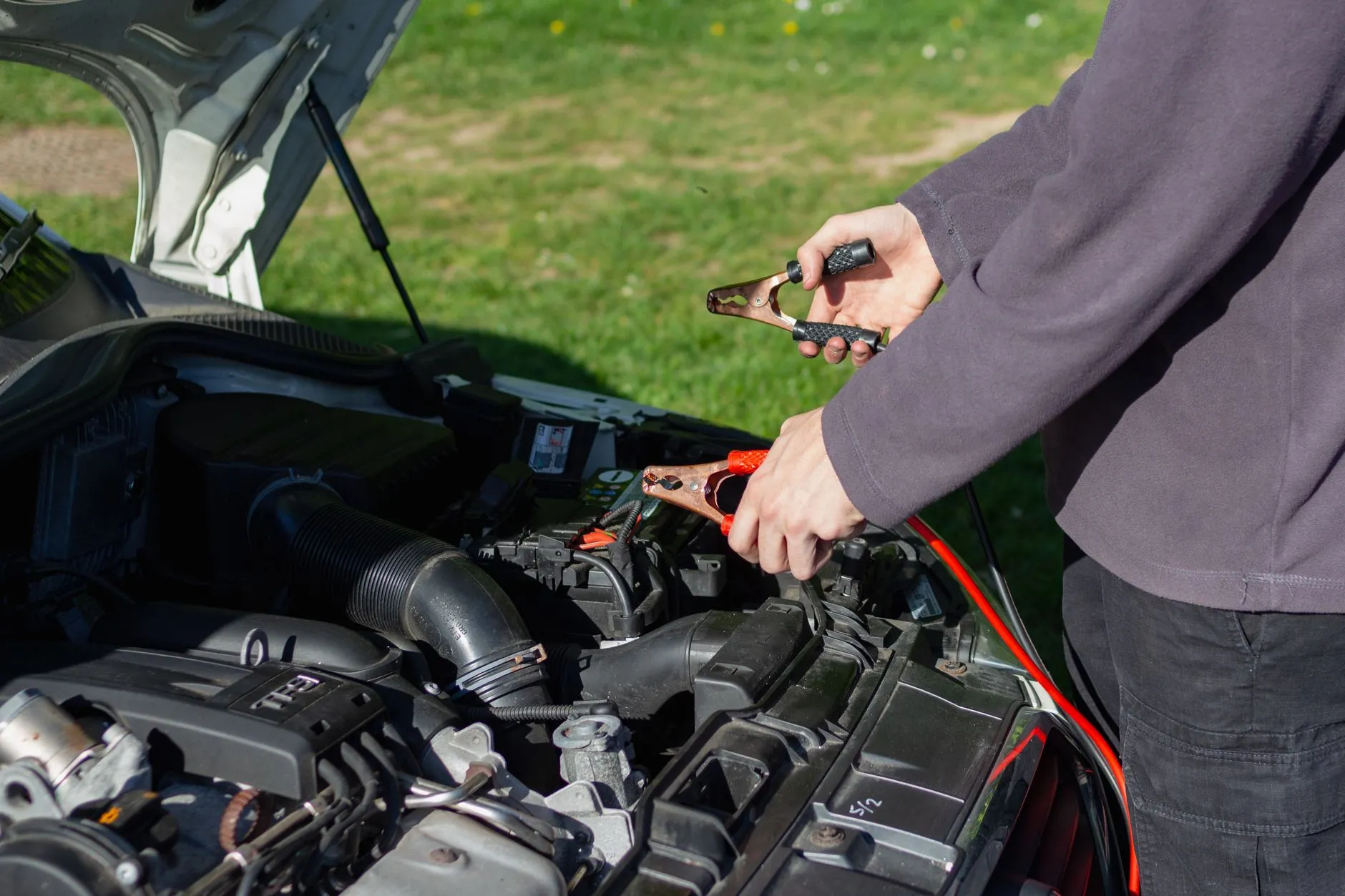
Why "Needs a Jump" Is a Discount
Understand what those four words do to a listing. They cut the buyer pool down to people who own a jump pack, know how to use it, and are comfortable buying a car they have not driven. That is a small group, and small groups do not bid prices up.
They also do something to the seller. A car that will not start cannot be shown easily, which means every appointment is awkward and half of them cancel. After the third no-show the seller stops defending the price.
So the flipper's edge here is not mechanical skill. It is being able to walk up, start the car, run four measurements, and know within ten minutes whether you are looking at a consumable or a problem. Everyone else is guessing, and guessing is why they offered nothing at all.
One caution before the fun part. This works because you can diagnose it, not because dead cars are automatically cheap. A no-start car you cannot evaluate is exactly as risky as everyone thinks it is.
Three Things a Dead Battery Actually Means
Nearly every no-start on a Marketplace car traces to one of three causes, and they cost wildly different amounts of money.
The battery is old. This is the common one and the boring one. Lead-acid batteries last somewhere in the four-to-six year range depending on climate, and a car that sat for a month in the cold with a five-year-old battery is simply done. Replacement is one part, no labor if you own a wrench, and it is the cheapest possible answer.
The alternator is not charging. The battery is a buffer, not a power source. If the alternator has failed, the car will start on a jump and then die a few miles later once the buffer drains. This costs real money, and the parts price varies enormously by vehicle. It also tends to come with a second bill, because running an alternator into the ground usually kills the battery too.
Something is draining it with the key off. A parasitic draw. The battery and alternator both test fine, the car runs perfectly, and it is dead every third morning. This is the one that turns into a diagnostic rabbit hole, and it is the one worth the most caution.
There is a fourth possibility worth naming: the battery is fine and the connection is not. Corroded terminals and a loose clamp produce an identical no-start, and the fix is a wire brush and a wrench. Check this before anything else, because it would be embarrassing to negotiate 400 dollars off a car over a dirty terminal.
The Ten-Minute Driveway Test
Run these in order. Each one narrows the field, and by the last measurement you know what you are buying.
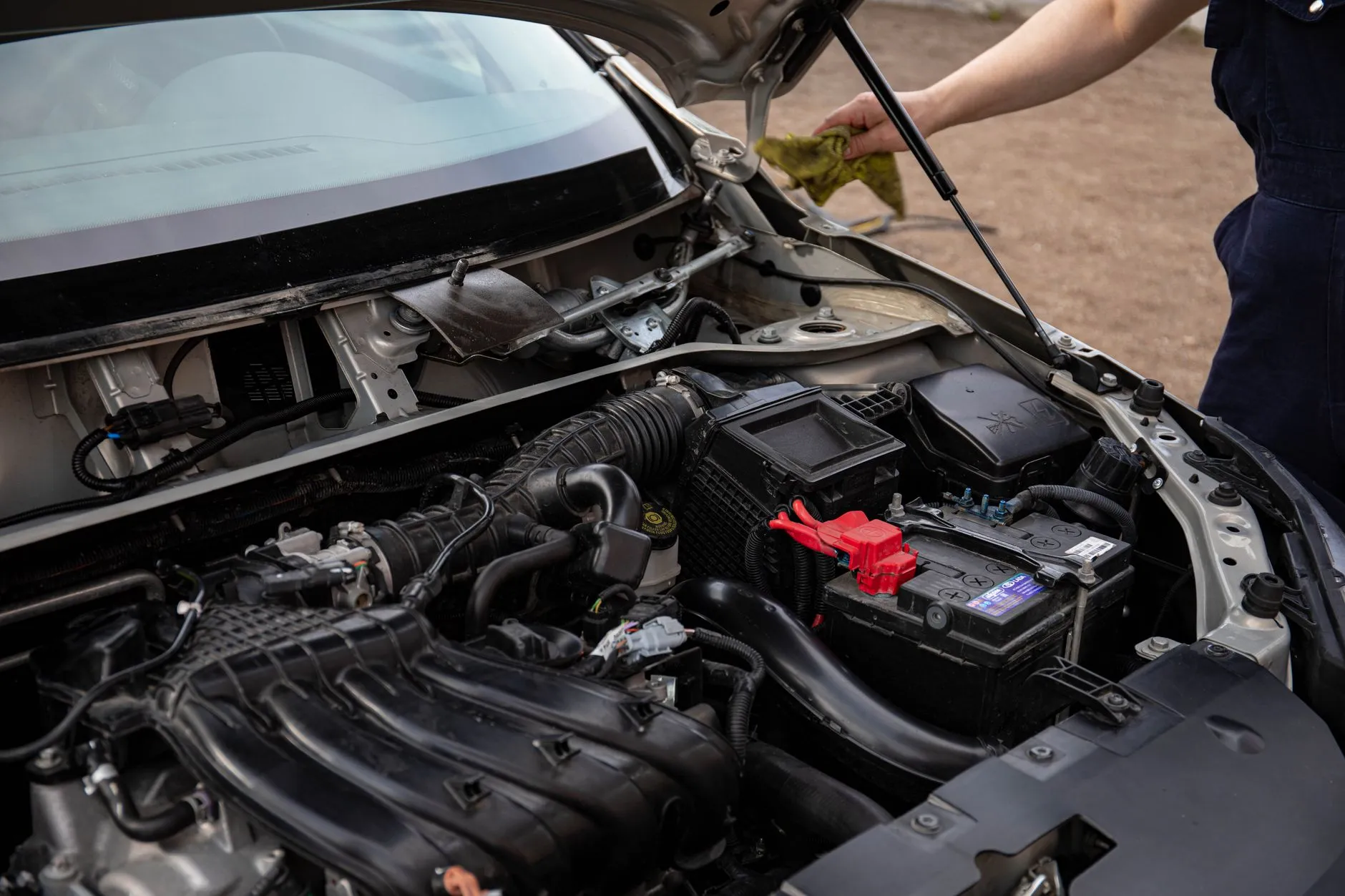
1. Resting voltage. Engine off, car untouched for at least an hour if you can manage it. Put the meter across the terminals. About 12.6 volts is a fully charged healthy battery. Roughly 12.4 is three quarters, 12.2 is about half, and under 12.0 volts is deeply discharged. A battery sitting at 11.8 has been flat for a while, and deep discharges permanently reduce capacity even after recharging.
2. Terminals and date code. Look for the white or green crust of corrosion and wiggle each clamp. Then find the manufacture date sticker on the case, usually a letter for the month and a digit for the year. If that sticker says the battery went into service five years ago, you have most of your answer already and you did not need a single test.
3. Cranking voltage. Leave the meter connected and have the seller crank it, using your jump pack if needed. Watch the number during cranking. A dip is normal. A drop below about 9.6 volts means the battery cannot deliver current under load, which is the failure mode that fools people, because that battery can read a perfectly respectable 12.5 volts at rest and still be junk.
4. Charging voltage. Engine running at idle, meter still on the terminals. You want somewhere in the 13.7 to 14.7 volt range. Around 12 volts with the engine running means the alternator is not doing its job. Above 15 volts means the voltage regulator is overcharging, which boils a battery dry over a few months and explains why the "new" battery in the car is already flat.
5. Load test. A dedicated battery load tester applies a real load and reports cold cranking amps against the battery's rating, which is a firmer answer than voltage alone. It is optional if you have the cranking-voltage number, and useful if you want a printout to hand a seller.
Do all of this with the OBD-II scan running in parallel if you can. Charging system faults often store codes, and a car that has been jump started repeatedly frequently has a cluster of low-voltage codes across several modules that clear up once the electrical problem is fixed.
Finding a Parasitic Draw
If the battery tests good and the alternator charges properly but the car still dies overnight, something is awake that should be asleep.
Testing for it takes patience more than skill. Set your multimeter to measure current, connect it in series on the negative battery cable, and then wait. Modern cars keep modules awake for anywhere from several minutes to half an hour after you close the door, and if you take a reading too early you will see a large number and panic over nothing.
Once everything sleeps, most healthy vehicles settle somewhere under about 50 milliamps. A few hundred milliamps means something is running. From there it is a fuse-by-fuse hunt: pull one, watch the meter, and when the number drops you have found the circuit.
The usual suspects are boring. Aftermarket stereos and alarms wired to a constant-hot source are the most common by a mile, followed by trunk and glovebox lights that never switch off, and modules that fail to enter sleep mode. If the car has visible aftermarket electronics and a mystery drain, those two facts are probably related.
For a flipper, the honest read on parasitic draws is this: the parts are cheap and the hours are not. If you can chase it yourself, a draw is a bargaining chip that costs you an afternoon. If you are paying shop rates to find it, the diagnosis alone can wipe out the discount you negotiated.
 Catch the "Needs a Jump" Listings First
Cars with problems in the title get fewer views and lower prices, and they still sell fast when someone knows what they are looking at. CarSnipe checks  Facebook Marketplace every 3 minutes on Pro and sends a
  Telegram alert when a match appears in your price range.
get the listing before the other buyers message · View pricing
What to Keep in the Trunk
This is a small kit and it lives in a bag next to your inspection gear. Total cost is less than the discount on one no-start car.
A lithium jump starter
The single most useful item. Modern lithium packs are the size of a paperback, hold their charge for months in a trunk, and include reverse-polarity protection so a mistake beeps at you instead of destroying a fuse box.
For four and six cylinder gas engines, a pack in the 1,000 peak amp class covers nearly everything. The NOCO Boost Plus GB40 is the default recommendation for a reason: it is compact, it is built better than most of what it competes with, and it holds charge long enough to actually be there when you need it.
If you look at trucks, V8s, or diesels, size up to the NOCO Boost HD GB70 at 2,000 peak amps. If you buy cars in a climate that gets genuinely cold, the Hulkman Alpha85S preheats its own cells before delivering current, which matters at temperatures where ordinary lithium packs lose most of their output. On a tighter budget, the AVAPOW packs are the reasonable value option.
Treat peak amp ratings as a rough class indicator rather than a spec. There is no standard behind the number, so a 4,000 amp claim from an unknown brand and a 1,000 amp rating from an established one are not measuring the same thing.
A multimeter
Every test above except the load test runs off one. You do not need a good one. A basic digital multimeter that reads DC volts and DC amps costs less than a tank of gas and turns four vague opinions into four numbers. If you are buying one specifically for this, get one rated to at least 10 amps on the current range so you can do parasitic draw testing without blowing its internal fuse.
Terminal cleaning tools
A terminal brush and a small wrench live in the same bag. Cleaning a corroded post takes two minutes and occasionally fixes the entire problem, which is a satisfying way to buy a car at a no-start discount.
A battery maintainer, for after you buy
This one is for the driveway rather than the inspection. Flip cars sit while you photograph, list, and wait for buyers, and a car that sits kills its own battery. A trickle charger and maintainer on the car in your driveway means the buyer who shows up on day nine hears it fire immediately, which is worth more than it costs.
Pricing Each Outcome Into Your Offer
Diagnosis only pays if it changes your number. Once you know which of the three causes you have, the negotiation writes itself.
Old battery, everything else healthy. This is the good outcome. A replacement battery is one of the least expensive repairs a car can need, and you just bought a vehicle at no-start pricing that is now a running car. Deduct the cost of the battery and your time, then buy it.
Alternator not charging. Real money, and the range is wide depending on the vehicle and whether you turn your own wrenches. Look up the part price for that specific engine while standing there, add labor if you are paying someone, and present the total. Assume you are buying a battery as well, because the old one has been repeatedly drained.
Parasitic draw. Price the diagnostic hours, not the part. If the seller has a story about the car "just doing this sometimes," you are the third person to look at it, and the discount needs to be large enough that an unknown electrical gremlin is still profitable.
Cranks slowly but starts, and everything measures fine. Look at the starter and the grounds before you assume you understand the car. A slow crank with good battery voltage and clean terminals points somewhere other than the battery.
Fold whichever number applies into your buy price the same way you would any other repair. Our guide on pricing a car to flip covers the arithmetic of turning repair estimates into an offer that still leaves you a margin.
Four Ways to Get This Wrong
Jumping a damaged battery. If the case is swollen, cracked, or leaking, or if you smell something like rotten eggs near it, stop. That is a battery that has been overcharged or has an internal short, and pushing current into it is how people end up with acid on their hands. It also tells you something about the charging system that you should price in.
Testing immediately after the seller drove it around the block. Twenty minutes of driving puts a surface charge on the battery that inflates resting voltage. If the seller "just moved it," your 12.6 volt reading is optimistic. Let it sit, or lean harder on the cranking voltage test, which surface charge cannot hide behind.
Reading parasitic draw too early. Modules stay awake after you shut the door. Take a reading two minutes in and you will convince yourself a perfectly normal car has a catastrophic drain.
Buying the story instead of the measurement. "It just needs a battery" is the most common sentence attached to a no-start listing, and often it is even true. Sometimes it is what the last owner was told by someone who also did not test it. The measurements take ten minutes and they do not have an opinion.
Get to Every Deal Sooner
The cars worth buying are the ones other people scroll past, and they still get taken within hours. CarSnipe checks Facebook Marketplace every 3 minutes on Pro while the computer is on and awake, and pings your Telegram when a vehicle matching your criteria turns up.
Frequently Asked Questions
It depends entirely on why it will not start, and that is a ten-minute question rather than a gamble. A car that fires immediately on a jump pack and then shows normal charging voltage almost always needs a battery, which is one of the cheapest repairs on a vehicle. A car that will not turn over even with a strong jump, or that starts and then dies as soon as the pack comes off, is a different conversation. The important thing is that a no-start listing scares away most casual buyers, so the price is usually soft even when the underlying fix is inexpensive.
Measure voltage with the engine running. A working alternator puts out roughly 13.7 to 14.7 volts at idle. If the car is running and the meter still reads about 12 volts, the alternator is not charging and the car is running on stored battery power alone, which is why it dies shortly after a jump. If charging voltage looks correct but the battery cannot hold a charge overnight or drops below about 9.6 volts while cranking, the battery is the problem. Both readings take under a minute with a cheap multimeter.
For four and six cylinder gasoline engines, a pack in the 1,000 peak amp range handles almost everything you will encounter. Larger V8s, diesels, and anything you are trying to start in genuine cold need more, which is where 2,000 peak amp packs earn their price. Peak amps is a marketing number rather than a standard, so treat it as a rough class indicator instead of a spec. What matters more day to day is whether the pack holds its charge for months in a trunk, because a jump starter that is flat when you need it is decoration.
The part is usually cheap and the diagnosis is what costs money. Finding a draw means pulling fuses one at a time while watching a meter until the number falls, which a shop bills as diagnostic labor and can run a couple of hours. Common causes are an aftermarket stereo or alarm wired badly, a glovebox or trunk light that never turns off, and a module that fails to go to sleep. If you can do the fuse-pulling yourself it is an afternoon. If you cannot, budget for the labor before you make an offer.
Modern lithium jump packs with reverse-polarity protection are hard to misuse, which is the main reason they replaced cable-and-donor-car jumping. The real risks are connecting backwards with unprotected cables, which can take out modules and fuses, and jumping a battery that is visibly swollen, leaking, or frozen, which can rupture it. If a battery case is bulging or you can smell rotten eggs near it, do not jump it and do not buy the car without factoring in a new battery and an inspection of whatever cooked the old one.