
Quick Answer: The Real Numbers
A realistic car flipper working part-time (2-3 flips per month) can expect $1,500-$4,500 in gross monthly profit. Full-time flippers doing 6-10 cars per month can gross $6,000-$20,000 monthly, though net income after costs, taxes, and reinvestment is significantly lower. The average profit per flip ranges from $500-$1,500 on budget cars to $2,000-$5,000 on premium vehicles. These numbers assume you buy well below market value, keep reconditioning costs controlled, and sell within 2-4 weeks. If anyone tells you they consistently make $5,000+ per flip on every car with no experience, they are selling you a course, not telling you the truth.

Car flipping has become one of the most-discussed side hustles online, and for good reason — the margins can be real if you know what you are doing. But the internet is flooded with inflated income claims from people selling courses, and that makes it hard to separate the signal from the noise.
This guide uses conservative, realistic numbers based on what an average person — not a mechanic, not a dealer, not someone with a lift in their garage — can actually achieve. Every cost is accounted for. Every number assumes things occasionally go wrong, because they will.
Realistic Profit Per Flip by Price Tier
Not all flips are created equal. The price tier you operate in determines your profit potential, capital requirements, and risk exposure. Here is what to expect at each level.
Budget Tier: $1,000-$3,000 Purchase Price
Expected profit: $500-$1,500 per flip
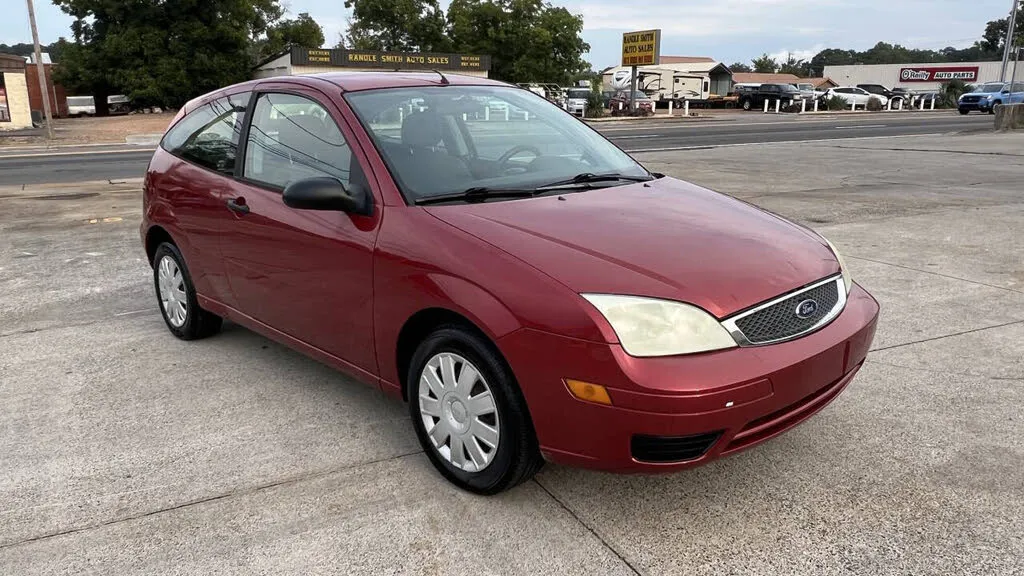
This is where most beginners start, and for good reason. The capital at risk is low, the buyer pool is large (everyone needs cheap transportation), and mistakes are less expensive. You are buying cars with cosmetic issues, higher mileage, or minor mechanical needs — then cleaning them up and reselling at fair market value.
A typical budget flip looks like this: buy a 2012 Honda Civic with 140,000 miles for $2,500 from a motivated seller. Spend $200 on detailing, $150 on new brake pads, and $75 on title/registration. List it for $3,800-$4,200 and sell for $3,600 after negotiation. Net profit: roughly $675 after all costs. Not glamorous, but repeatable.
The risk at this tier is buying a car that needs more work than expected — a failing transmission or a head gasket issue can instantly erase your margin and then some.
Mid-Range Tier: $3,000-$8,000 Purchase Price
Expected profit: $1,000-$3,000 per flip
This is the sweet spot for experienced flippers. Cars in this range are newer, lower mileage, and appeal to buyers who are willing to pay more for reliability. The margins are larger in absolute dollars, but the capital commitment is higher and the holding cost of tying up $5,000-$8,000 per vehicle is real.
A typical mid-range flip: buy a 2017 Toyota RAV4 with 85,000 miles for $7,000 from someone relocating. Spend $350 on professional detailing, $200 on new tires (two that are worn), and $100 on registration. List at $10,500 and sell for $9,800. Net profit: roughly $2,150. This tier rewards knowledge — knowing which models hold value, which trims command premiums, and which years to avoid due to known issues.

Premium Tier: $8,000-$15,000 Purchase Price
Expected profit: $2,000-$5,000 per flip
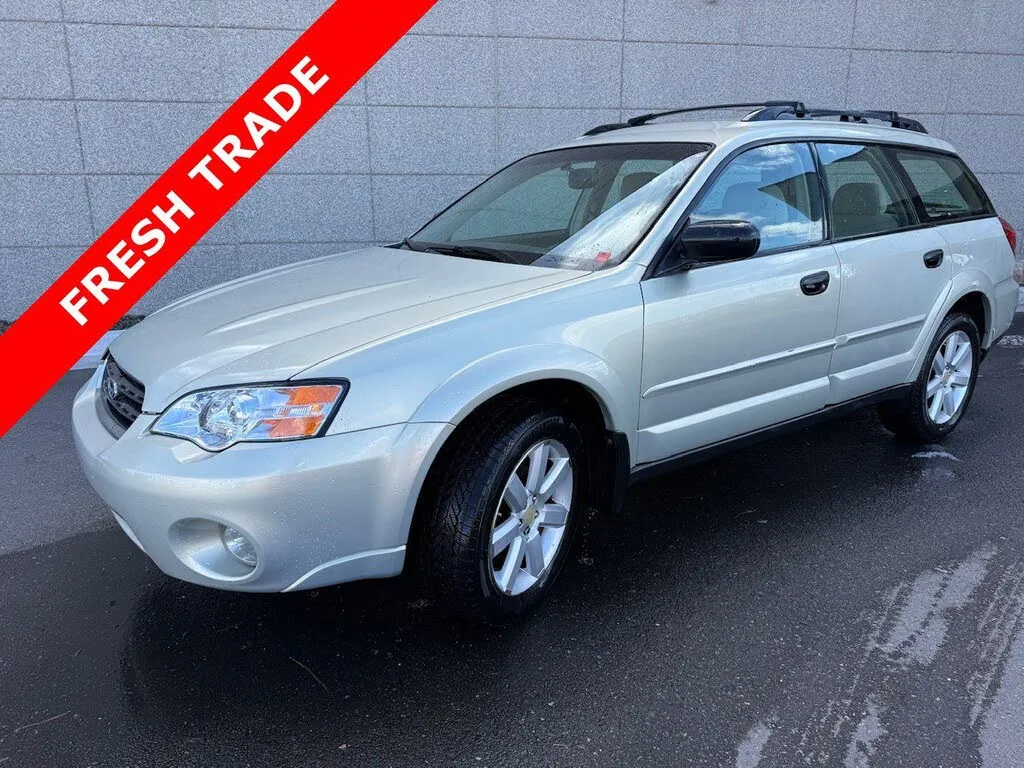
Premium flips offer the highest per-unit profit but require the most capital, expertise, and patience. Buyers in this range are pickier, more likely to get a pre-purchase inspection, and slower to commit. Holding times stretch to 3-6 weeks, which matters if your capital is limited.
This tier works best for flippers with deep knowledge of specific makes and models — someone who knows that a particular BMW 3 Series year has a reliable engine while the year before it does not, or that a specific Lexus trim with the right options package commands a significant premium. If you are looking for the best cars to flip for profit, understanding these nuances is what separates consistent earners from one-hit wonders.
Monthly Income Scenarios
Per-flip profit is useful, but what most people really want to know is: what can I actually bring home each month? Here are two realistic scenarios.
Part-Time: 2-3 Flips Per Month
This is the realistic target for someone with a full-time job who flips cars on evenings and weekends. At 2-3 flips per month in the budget-to-mid-range tier:
- Gross monthly profit: $1,500-$4,500
- Estimated costs (per month): $200-$600 (detailing, minor repairs, registration, advertising)
- Self-employment tax (15.3%): $200-$600
- Income tax (varies by bracket): $150-$700
- Realistic net take-home: $800-$2,600 per month
That is $9,600-$31,200 per year in additional income. Not life-changing for most people, but a meaningful supplement — and achievable with 20-40 hours of work per month.
Full-Time: 6-10 Flips Per Month
Full-time flipping requires a dealer license in most states (typically mandatory above 4-6 vehicles per year), dedicated workspace, and $15,000-$30,000 in working capital to keep multiple vehicles in rotation.
- Gross monthly profit: $6,000-$20,000
- Monthly operating costs: $1,000-$3,000 (workspace, tools, insurance, advertising, detailing supplies)
- Self-employment tax: $750-$2,600
- Income tax: $600-$3,000
- Realistic net take-home: $3,500-$11,000 per month
The upper range — $11,000 net monthly — requires consistent deal flow, efficient reconditioning, and fast turnaround. Most full-time flippers land in the $4,000-$7,000 net range, which is a reasonable living but far from the six-figure claims you see on YouTube.
Hidden Costs That Eat Your Margins
The difference between successful flippers and people who quit after three months usually comes down to one thing: they underestimated costs. Here is what actually eats into your margin on every flip.
Title, Registration, and Fees
Every time you buy and sell a car, you are paying transfer fees. Title transfer costs $15-$75 depending on your state. Registration ranges from $30-$150. If you need a temporary tag or transit permit, add another $10-$30. These fees apply on both the buy and sell side, so you are looking at $50-$200 per flip in paperwork costs alone.
Detailing and Cosmetics
A thorough detail — interior shampoo, exterior polish, engine bay cleaning — costs $150-$300 if you pay a professional. DIY detailing drops that to $30-$50 in supplies per car but adds 3-5 hours of labor. Either way, every car needs it. Buyers make purchase decisions based on first impressions, and a clean car sells for $300-$800 more than a dirty one in the same mechanical condition.
Repairs and Parts
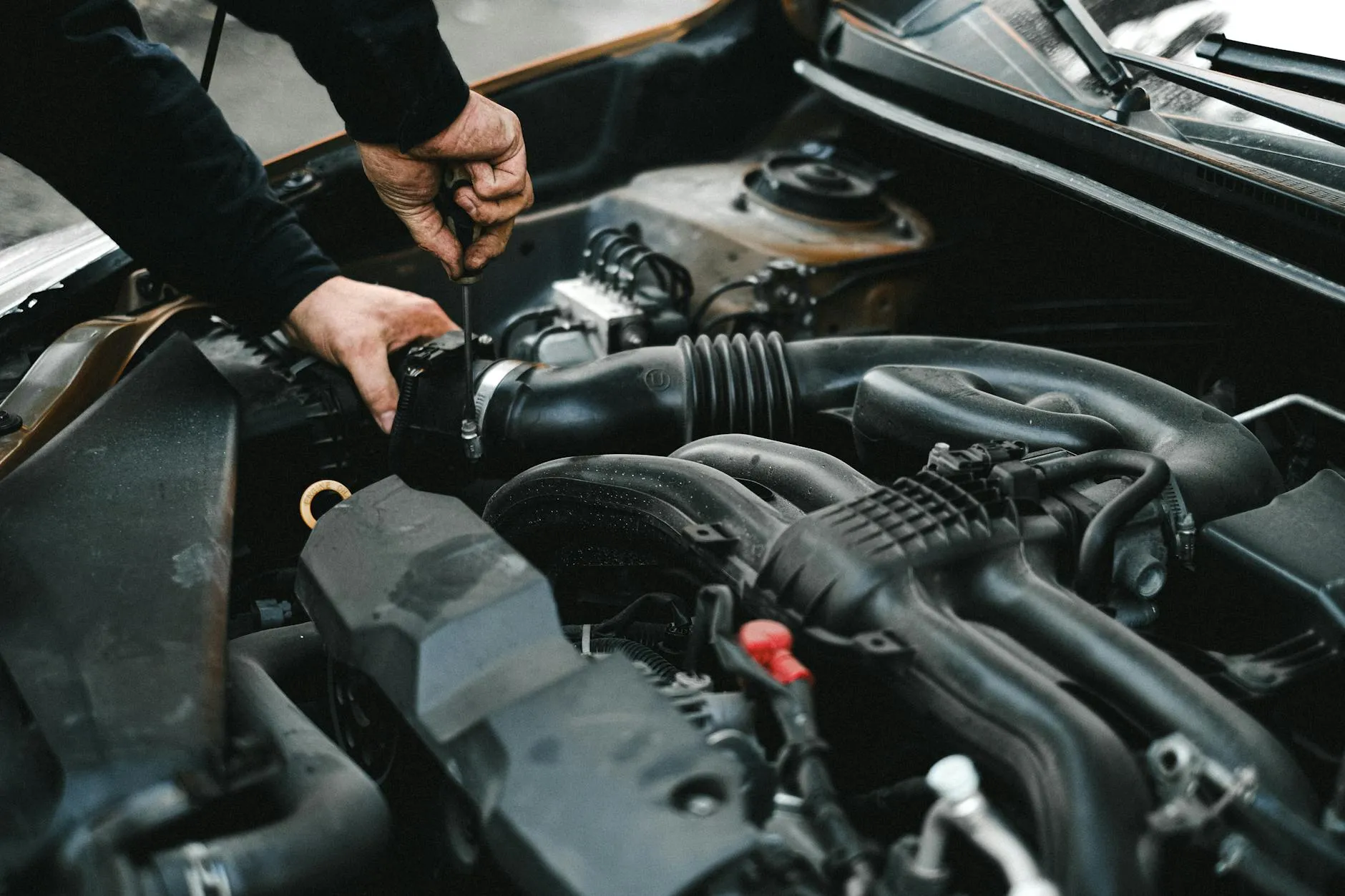
Budget $200-$500 per flip for minor repairs: brake pads, batteries, belts, bulbs, worn tires, and small cosmetic fixes. You will occasionally encounter a flip that needs $1,000+ in unexpected repairs — an alternator, a CV axle, a catalytic converter. Building a repair fund into your budget is essential because these surprises are not surprises; they are statistical certainties when you buy enough cars.
Tools and Equipment
A basic tool set, floor jack, jack stands, OBD2 scanner, and battery charger run $300-$600 upfront. These are one-time costs that pay for themselves quickly, but they are real startup expenses that many new flippers overlook.
Advertising
 Facebook Marketplace listings are free, which is one reason it dominates the used car market. But if a car sits longer than expected, you may need to boost the listing ($5-$20) or cross-post to
  Craigslist,
  OfferUp, or local classifieds. Budget $0-$50 per flip for advertising — some cars sell in 48 hours with zero ad spend, others need a push.
Insurance and Liability
If you are driving vehicles to inspect them, move them to your workspace, or bring them to a mechanic, you need insurance coverage. Some flippers maintain a dealer policy; others add temporary coverage per vehicle. At minimum, budget $50-$100 per month for additional insurance costs. Operating without coverage is a risk that one accident will make you deeply regret.
Your Time
This is the cost most people ignore entirely. If you spend 12 hours on a flip that nets $800 in profit, your effective hourly rate is about $67 — solid. But if you spend 20 hours on a flip that nets $400 because the car had more issues than expected, you are working for $20 per hour before taxes. Tracking your time honestly is how you figure out which types of flips are actually worth your effort.
Startup Costs: What You Need to Get Started
Here is a realistic breakdown of what it costs to start flipping cars, assuming you are working from a home garage or driveway.
Minimum Viable Budget: $3,000-$5,000
- First vehicle purchase: $1,500-$3,000
- Basic tools and OBD2 scanner: $200-$400
- Detailing supplies: $100-$200
- Title, registration, and fees: $50-$200
- Minor repairs budget: $200-$500
- Emergency fund (one bad flip): $500-$1,000
At this level, you are doing one flip at a time. Buy, fix, sell, repeat. It is slow but it preserves capital and lets you learn without catastrophic risk.
Comfortable Budget: $7,000-$10,000
- Two vehicles in rotation: $4,000-$7,000
- Full tool set with jack and stands: $400-$600
- Detailing supplies and buffer: $200-$300
- Fees and repairs fund: $500-$1,000
- Emergency fund: $1,000-$2,000
With $7,000-$10,000, you can overlap flips — selling one car while reconditioning the next. This increases throughput and monthly income without requiring a proportional increase in hours worked. It is the level where car flipping starts to feel like a real operation rather than an occasional hobby.
Tax Implications Most Flippers Ignore
This is the section nobody wants to read, but ignoring it will cost you more than any bad flip ever will.
Self-Employment Tax
Car flipping profit is self-employment income. That means you owe self-employment tax of 15.3% (12.4% Social Security + 2.9% Medicare) on top of your regular income tax. On $30,000 in annual flipping profit, that is $4,590 in self-employment tax alone — before income tax. This is the single biggest surprise for new flippers who assumed they would keep everything above their purchase price.
Record Keeping
Keep a detailed log of every transaction: purchase price, repair costs, parts receipts, mileage driven, advertising spend, and sale price. These are all deductible business expenses that reduce your taxable profit. A $3,000 gross profit with $800 in documented expenses is only $2,200 in taxable income. Without records, the IRS can assess tax on the full sale price. Use a simple spreadsheet or an app like QuickBooks Self-Employed to track everything from day one.
Dealer License Thresholds
Most states require a dealer license if you buy and sell more than a certain number of vehicles per year. The threshold varies — it is 5 in California, 6 in Texas, 4 in Florida, and as low as 2 in some states. Operating without a license when required is a misdemeanor in most jurisdictions and can result in fines, seizure of inventory, and inability to obtain a license later. Check your state's DMV website before you start, and get the license if you plan to do this seriously. The cost is typically $200-$1,000 annually, which is negligible compared to the legal risk of operating without one.
Sales Tax
In most states, the buyer pays sales tax when they register the vehicle. However, if you have a dealer license, you may be required to collect and remit sales tax directly. The rules vary by state, so consult a tax professional or your state's Department of Revenue before your first sale. Getting this wrong can create a tax liability that dwarfs your profit on any individual car.
Time Investment: Hours Per Flip
Car flipping is not passive income. Every flip requires hands-on work across multiple stages, and understanding the time commitment is essential for calculating your true hourly rate.
Sourcing: 2-4 Hours
This includes browsing listings, researching market values, contacting sellers, and arranging inspections. If you are manually scrolling Facebook Marketplace, this step takes longer and yields fewer results. If you are using automated tools to find underpriced cars, you can cut sourcing time significantly while seeing better deals.
Inspection and Purchase: 2-3 Hours
Driving to see the car, inspecting it, test driving, negotiating the price, and handling the paperwork. This is non-negotiable time — never buy a car without seeing it in person, regardless of how good the deal looks online.
Reconditioning: 4-8 Hours
This is where most of your time goes. A basic flip — detail, minor repairs, touch-up paint — takes 4-6 hours. A more involved flip with brake work, fluid changes, or interior repairs can stretch to 8-12 hours. The more you can do yourself, the higher your margin, but also the higher your time investment.
Listing and Selling: 2-4 Hours
Photographing the car (do this properly — good photos sell cars faster), writing the listing, responding to inquiries, filtering out tire-kickers, scheduling test drives, and closing the sale. A car that sells in 3 days requires less of your time than one that sits for 3 weeks fielding lowball offers.
Total: 10-19 Hours Per Flip
On a $1,500 profit flip, that is $79-$150 per hour. On a $600 profit flip, it is $32-$60 per hour. Tracking your hours per flip is the single best way to figure out which types of cars and which price tiers give you the best return on your time — not just your money.

Why Speed Matters — First to the Deal Wins
Here is a truth that experienced flippers understand intuitively: your profit margin is largely determined before you buy the car. The better the purchase price, the wider the margin. And the best purchase prices go to the fastest buyers.
When a motivated seller lists a 2015 Honda Accord for $4,500 — $2,000 below market value — the listing does not sit there waiting for you to find it during your evening scroll. Within 30 minutes, that seller has received 5-10 messages. Within 2 hours, someone has come to see it. Within 4 hours, it is sold or pending. The flippers who consistently find the best deals on Facebook Marketplace are not luckier than everyone else. They are faster.
This is where your sourcing strategy directly impacts your income. Manually checking Facebook Marketplace a few times a day means you are seeing listings that are already 4-8 hours old. The best deals from that batch are already gone. You are left with the cars nobody else wanted — which are either fairly priced (low margin) or have hidden problems (negative margin).
 CarSnipe flips this dynamic. It monitors Facebook Marketplace every 3 minutes and sends instant
  Telegram alerts when a new listing matches your criteria — make, model, year range, price range, mileage, location. Instead of discovering a deal 6 hours after it was posted, you see it within minutes. That timing difference is often the difference between a $2,000 profit flip and never knowing the listing existed.
For flippers specifically, the math is straightforward. If faster sourcing helps you buy just one car per month at $500 less than you would have otherwise, that is $6,000 per year in additional profit — far more than any tool or subscription costs.
Find Flip-Worthy Deals Before Anyone Else
CarSnipe monitors Facebook Marketplace every 3 minutes and sends instant Telegram alerts when underpriced cars appear. For flippers, being first to the listing is the difference between a great margin and a missed opportunity.
install the extension and let it watch for flip candidates · View pricing
Common Mistakes That Kill Profit Margins
Most flippers who fail do not fail because the business model is broken. They fail because they make avoidable mistakes that erode their margins until the effort is no longer worth the return.
Buying Emotionally Instead of Analytically
You see a car you like, you want to own it for a few weeks, and you convince yourself the numbers work even though they are thin. This is the most common mistake and the most expensive. Every purchase should be backed by a simple spreadsheet: estimated purchase price, estimated repair costs, estimated sale price, and minimum acceptable profit. If the numbers are not there, walk away — no matter how good the car looks.
Underestimating Repair Costs
That "minor" engine noise turns into a $1,200 repair. The "just needs a detail" interior needs a $400 headliner replacement. Always budget 20-30% more than your initial repair estimate. If you budget $300 in repairs and spend $250, great — you kept the surplus. If you budget $300 and spend $600, you just cut your profit in half.
Holding Too Long
Every day a car sits unsold is a day your capital is tied up and not working on the next flip. If a car has not sold in 2-3 weeks, drop the price. A $200 price reduction that sells the car this week is almost always better than holding for another 3 weeks hoping for full price. Time has a cost, even if it does not show up on a receipt.
Skipping the Pre-Purchase Inspection
A $100-$150 mechanic inspection before buying can save you thousands. It is the highest-ROI expense in the entire flipping process. Skipping it to save time or money is a false economy that catches up with every flipper eventually. Our guide to finding underpriced cars covers how to evaluate deals quickly without cutting corners on due diligence.
Ignoring Market Demand
Buying a car because it is cheap is not the same as buying a car because it is underpriced. A 2008 Chrysler 200 for $1,500 might be $500 below market, but if nobody wants to buy a 2008 Chrysler 200, you will sit on it for weeks. Focus on vehicles with proven resale demand — Honda, Toyota, Ford trucks, popular SUVs. The best cars to flip for profit are the ones that sell quickly, not the ones that are cheapest to buy.
Not Tracking Finances
If you do not know your true profit per flip — accounting for every fee, every supply, every hour of labor — you do not actually know if you are making money. Many flippers who think they are earning $2,000 per flip are actually earning $800 after accounting for costs they forgot to track. Start a spreadsheet before your first purchase and update it religiously.
Stop Missing the Best Deals
The most profitable flips start with the best purchase price. CarSnipe sends you instant alerts when underpriced cars hit Facebook Marketplace — so you can make an offer before the competition even sees the listing. 7-day free trial — cancel anytime before you are charged.
Frequently Asked Questions
Realistic profit per flip depends on the price tier. Budget flips (cars bought for $1,000-$3,000) typically yield $500-$1,500 profit after costs. Mid-range flips ($3,000-$8,000 purchase price) yield $1,000-$3,000. Premium flips ($8,000-$15,000) can yield $2,000-$5,000 but require more capital and carry higher risk. These numbers assume you buy at 20-30% below market value, spend moderately on reconditioning, and sell within 2-4 weeks. Most beginners should expect to land in the lower end of each range for their first several flips.
Car flipping can be a profitable side hustle if you approach it with realistic expectations and adequate startup capital. A part-time flipper doing 2-3 cars per month can reasonably earn $1,500-$4,500 monthly in gross profit, though net income after costs, taxes, and time investment will be lower. The main advantages are low barrier to entry, flexible hours, and the ability to scale. The main drawbacks are capital requirements ($3,000-$10,000 to start), self-employment tax obligations, and the risk of buying a car with hidden problems that erase your margin. It is not passive income — expect 10-15 hours of work per flip.
Most successful flippers recommend starting with $3,000-$10,000 in working capital. At the low end, $3,000 lets you buy one budget vehicle at a time, recondition it, and sell before buying the next. At $10,000, you can work on 2-3 vehicles simultaneously, which increases throughput and monthly income. You also need to budget for recurring costs: basic tools ($200-$500), detailing supplies ($100-$200), title and registration fees ($50-$200 per vehicle), and advertising costs ($0-$50 per vehicle). Starting with too little capital is the most common reason new flippers fail — one unexpected repair can wipe out your entire budget.
Yes. The IRS considers car flipping a business activity, and all profits are subject to both income tax and self-employment tax (15.3% for Social Security and Medicare). You must report car flipping income on Schedule C of your tax return. Most states also require sales tax collection when you sell a vehicle. If you flip more than a few cars per year, many states require a dealer license — the threshold varies by state but is typically 4-6 vehicles per year. Keep detailed records of every purchase price, repair cost, and sale price. Deductible expenses include parts, tools, advertising, mileage driven for buying and selling, and a portion of your workspace if you use a home garage.