
The five best used cars under $8,000 on Facebook Marketplace in May 2026 are the Honda Civic (2014-2016), Toyota Corolla (2013-2016), Mazda3 (2014-2016), Honda Fit (2015-2017), and Hyundai Elantra (2014-2017). At this budget, expect 90,000-140,000 miles with clean titles. The Elantra and Mazda3 give you the most car for the money; the Civic and Corolla give you the strongest resale value when you go to sell.
What Does $8,000 Really Buy on Facebook Marketplace?
Spend enough weekends scrolling Facebook Marketplace at this price and you learn the $8,000 line sits between two very different markets. Drop into the $7,000 range and you are looking at more miles and more repair risk. Move up to the $9,000 tier and the pool widens fast, with 80,000-mile odometers and full service binders starting to show up. At $8,000 you are right at the bottom edge of the productive used-car market: close enough to well-kept, reliable inventory to land a genuinely good car, but low enough that you have to be patient and pass on a lot of junk before the right one shows up.
Here is what $8,000 typically buys on Facebook Marketplace in May 2026:
- Model years: 2013-2017 for sedans and hatchbacks from reliable manufacturers
- Mileage: 95,000-140,000 miles is the realistic range; anything under 110,000 at this price moves within hours
- Condition: Clean titles are easily found; expect typical age-related wear (faded headlights, minor curb rash on wheels, some interior wear) rather than abuse
- Seller mix: Mostly private sellers; small independent dealers will be priced $500-$1,500 higher for the same vehicle
The most important reframe for buyers in this tier: maintenance records matter more than the odometer reading. A 130,000-mile Corolla with documented oil changes, brake service, and a recent timing-related inspection is a fundamentally better purchase than a 95,000-mile equivalent with no records and unknown history. Use Cox Automotive and iSeeCars retention data as a sanity check — the models recommended below routinely show up in long-service-life rankings — but lean hardest on the specific vehicle's paper trail.
Cox Automotive's used-vehicle research has noted that roughly 61% of used-car shoppers report tighter inventory has made finding the right vehicle at the right price harder than it was a few years ago. That dynamic is most visible in the sub-$10,000 tiers, where well-priced reliable cars on Facebook Marketplace routinely receive 5 to 10 buyer messages within 20 minutes of posting in competitive metros. Knowing the right models — and being among the first to see new listings — is how you actually close on one.
The price ranges in this guide aren't dealer averages or book values. They come from CarSnipe's own alert data: the real asking prices that our users' Facebook Marketplace searches turn up as listings post across U.S. metros. We track what private sellers are actually asking and adjust the ranges as the market moves. Updated July 2026.
What the Tier Looks Like When You're Actually Shopping
Once you have scrolled Marketplace at this budget for a few weekends, the pattern becomes obvious. Most of what comes up is 2013-2017 compact sedans and hatchbacks from the usual reliable brands, mixed in with a lot of noise: tired domestics with 180,000 miles, depreciated luxury cars that will bankrupt you on the first repair, and cars clearly priced for the photos rather than the condition. Learning to scroll past most of the listings quickly is most of the skill.
A few things are worth watching for at this tier specifically. Curbstoners are everywhere at $8,000. These are unlicensed dealers flipping cars out of their own driveway under a personal profile. The tells are consistent: the same phone number turns up on several different listings, the story is that they are "selling it for a friend" or it's "my uncle's car," they push to meet somewhere other than their home, and the title is not in their name. None of that is illegal, but it is a reason to walk, and you should.
Deferred maintenance is the default at this price, not the exception. Expect tires with not much tread left, brakes that are due, and a check-engine light the seller swears is "just an O2 sensor." That is not automatically a reason to pass; it is a reason to price it in. The bigger landmines are salvage and rebuilt titles that get buried in the description or left out until you ask directly, so ask directly every time.
The other thing you learn fast is that the good ones do not last. A clean-title Corolla or Civic with reasonable miles, priced where it should be, is gone before you finish typing your message. That is the whole game at this tier. The car is out there, but so are twenty other people who wanted it, and the seller answers the first serious buyer who shows up ready. Grinding hard on price rarely works here either, because sellers at this budget often owe close to what they are asking. Your leverage is being first and showing up that day with cash, not talking them down.
What Dealer Inventory Under $8,000 Actually Looks Like
Before the picks, here is the reality check, because it changes where you should shop rather than what you should buy. We pulled every listing the Auto.dev vehicle listings API returned for these five models priced between $2,000 and $8,000, on . That came back as 30 listings, and they are dealer retail rather than private party.
| Listings in the sample | 30 across 5 models |
| Price range | $3,495 – $7,994 (median $6,495) |
| Model year range | 1993 – 2018 (median 2003) |
| Median odometer | ~148,000 miles |
Read that median model year again: 2003, at about 148,000 miles. On a dealer lot, $8,000 does not reach the 2013–2017 cars recommended below — for the Civic and Corolla specifically, nothing in the sample was newer than 2010. The Elantra was the exception, with several 2013–2018 examples in range. The Mazda3 returned no listings in this band at all, so we are not going to pretend we measured it.
That gap is the argument for shopping private party rather than a lot. Marketplace prices run lower than dealer retail for the same car because there is no reconditioning, no lot overhead and no markup, which is what puts the model years below within reach at this budget. It is also why the sub-$8,000 tier rewards speed so heavily: the private-party listings that are both newer and correctly priced are the ones that disappear first.
Cars Under $8,000 for Sale Near You: How to Pull Today's Listings
Marketplace does not give you a clean "under $8,000" view by default. It ranks on engagement rather than recency, so a car listed this morning can sit below one that has been up for two weeks. The fix is to set the price ceiling and the sort order in the search URL itself, then open that URL instead of browsing the category.
Our search URL builder, already set to a $8,000 ceiling and newest-first, will assemble the address for you. Put one of the models from the table below in the keywords box and it becomes a search for that specific car at this budget.
Set the radius wider than feels comfortable. Marketplace measures distance from the seller's profile location rather than from the car, so a tight radius silently drops listings parked near you whose owner never updated their profile. Forty to sixty miles is a reasonable starting point in most metros.
Have the $8,000 Search Run Itself
Build the search once, then hand it to CarSnipe. It re-runs the search on a fixed interval and sends each new match to Telegram in about three minutes on Pro, so a car listed while you are at work is still waiting for you.
Start Free Trial on TelegramWhich Cars Under $8,000 Are Actually Reliable?
These five models consistently show up in long-term reliability rankings from Consumer Reports and J.D. Power and represent the strongest value picks at the sub-$8,000 price point on Facebook Marketplace today. The model-year ranges are what to hold out for on Marketplace, not what a dealer lot will show you at this price.
| Model | Years | Typical Marketplace asking price | The one thing to check |
|---|---|---|---|
| Honda Civic | 2014-2016 | $7,000-$8,000 | AC compressor, a $500-$700 repair, and front rotor warping from 70,000 miles |
| Toyota Corolla | 2013-2016 | $6,500-$7,800 | Whether the Takata airbag inflator recall was completed |
| Mazda3 | 2014-2016 | $6,000-$7,800 | Intake valve carbon buildup, a maintenance item on any direct-injection engine |
| Honda Fit | 2015-2017 | $6,500-$7,800 | On a 2015, the CVT low-speed shudder and whether the software update was applied |
| Hyundai Elantra | 2014-2017 | $5,500-$7,500 | NHTSA for open campaigns; the Nu engine is not the affected Theta II |
Asking ranges are the per-model figures stated elsewhere on this page, drawn from CarSnipe's Facebook Marketplace alert data. They are what private sellers ask, not what cars sold for.
Honda Civic (2014-2016)
Realistic price range: $7,000-$8,000 | Typical mileage: 100,000-140,000 | Ideal mileage threshold: Under 120,000
The ninth-generation Civic is the safest mainstream pick at this price. The 1.8L R18 engine uses a timing chain (no belt service to budget for), runs the lifespan of the chassis without major drama, and has well-understood failure modes. At 110,000 miles you are barely halfway through the typical service life of this powertrain. Honda's CVT in the 2014-2015 LX and the conventional automatic in 2016 are both proven units.
Known issues: Watch for AC compressor failure (a $500-$700 repair) and brake rotor warping on the lighter front rotors around the 70,000-90,000 mile mark. Some 2014 models had a minor recall for the parking brake — verify it's been addressed via the NHTSA recall database. Avoid the 2016 1.5L turbo Civic at this price — early oil-dilution issues require a verified TSB completion, which is rare on a private-sale car at this budget. Stick with the 1.8L LX trim.
What to inspect: CV boot integrity (listen for clicking on tight turns), brake pad and rotor thickness, AC performance at idle. Check the timing chain area for any whining sound on cold start.
Toyota Corolla (2013-2016)
Realistic price range: $6,500-$7,800 | Typical mileage: 100,000-140,000 | Ideal mileage threshold: Under 125,000
The Corolla is the unglamorous answer to "what do I buy to drive 80 miles a day for the next four years." The 1.8L 2ZR-FE (2013) and 2ZR-FAE (2014-2016) engines are bulletproof when given basic oil-change discipline. The car is not engaging to drive, but it is also not asking anything from you mechanically. Toyota's CVT in the 2014+ models is significantly more reliable than competing Nissan units.
Known issues: A subset of 2014-2016 models was covered under the Takata airbag inflator recall — verify replacement has been completed. Some owners report mild hesitation off the line with the CVT, which is calibration rather than failure. Water pump and thermostat are due in the 100,000-130,000-mile window — factor $400-$600 into your budget if it hasn't been done.
What to inspect: Undercarriage rust if the car spent winters in salt states. Listen for any cold-start valve tick that might indicate a needed valve adjustment. Confirm the AC and infotainment work — the early Entune systems can become sluggish.
Mazda3 (2014-2016)
Realistic price range: $6,000-$7,800 | Typical mileage: 90,000-130,000 | Ideal mileage threshold: Under 115,000
The third-generation Mazda3 is the value standout at $8,000. The 2.0L SkyActiv-G engine is naturally aspirated and built around long service life — Mazda3s consistently appear in iSeeCars analyses of vehicles most likely to reach 200,000+ miles. You get a car that's genuinely fun to drive with a well-tuned chassis, all at a price typically $700-$1,200 below comparable Civics and Corollas. The brand-perception discount works strongly in the buyer's favor here.
Known issues: Carbon buildup on intake valves is the only meaningful long-term concern on a direct-injected engine — not a defect, just a maintenance item. Budget $300-$400 for a walnut blast around the 100,000-mile mark. The 6-speed automatic is reliable; the manual is even more so. Infotainment screen delamination on 2014-2015 models is cosmetic but visible.
What to inspect: Listen for rear suspension knocks (worn trailing-arm bushings on higher-mileage examples). Check the rear brake calipers for sticking — a common Mazda3 wear item. Test the clutch engagement point if buying a manual; clutches at 100,000+ miles may be near end of life.
Honda Fit (2015-2017)
Realistic price range: $6,500-$7,800 | Typical mileage: 85,000-125,000 | Ideal mileage threshold: Under 110,000
The third-generation Fit punches well above its size. The 1.5L direct-injected engine produces 130 hp, which is modest on paper but plenty for a vehicle that weighs under 2,600 pounds. The real differentiator is utility — the Magic Seat system folds the rear seats completely flat, creating cargo space that rivals small SUVs. For buyers who need maximum practicality from a small reliable car, the Fit has no real competition at this price.
Known issues: The 2015 model year shipped with a CVT calibration that produced low-speed shudder. Honda issued a software update that resolved most cases. If test-driving a 2015 specifically, pay attention to slow-speed parking-lot maneuvers. The 2016-2017 models with the updated CVT calibration are generally trouble-free.
What to inspect: Roof and hood paint condition — the Fit's thinner paint shows chips earlier than heavier-gauge Hondas. Test the Magic Seat latches and hinges. AC performance at idle. Run a vehicle history report — the Fit's compact size means even minor collisions can affect structural alignment.
Hyundai Elantra (2014-2017)
Realistic price range: $5,500-$7,500 | Typical mileage: 90,000-135,000 | Ideal mileage threshold: Under 115,000
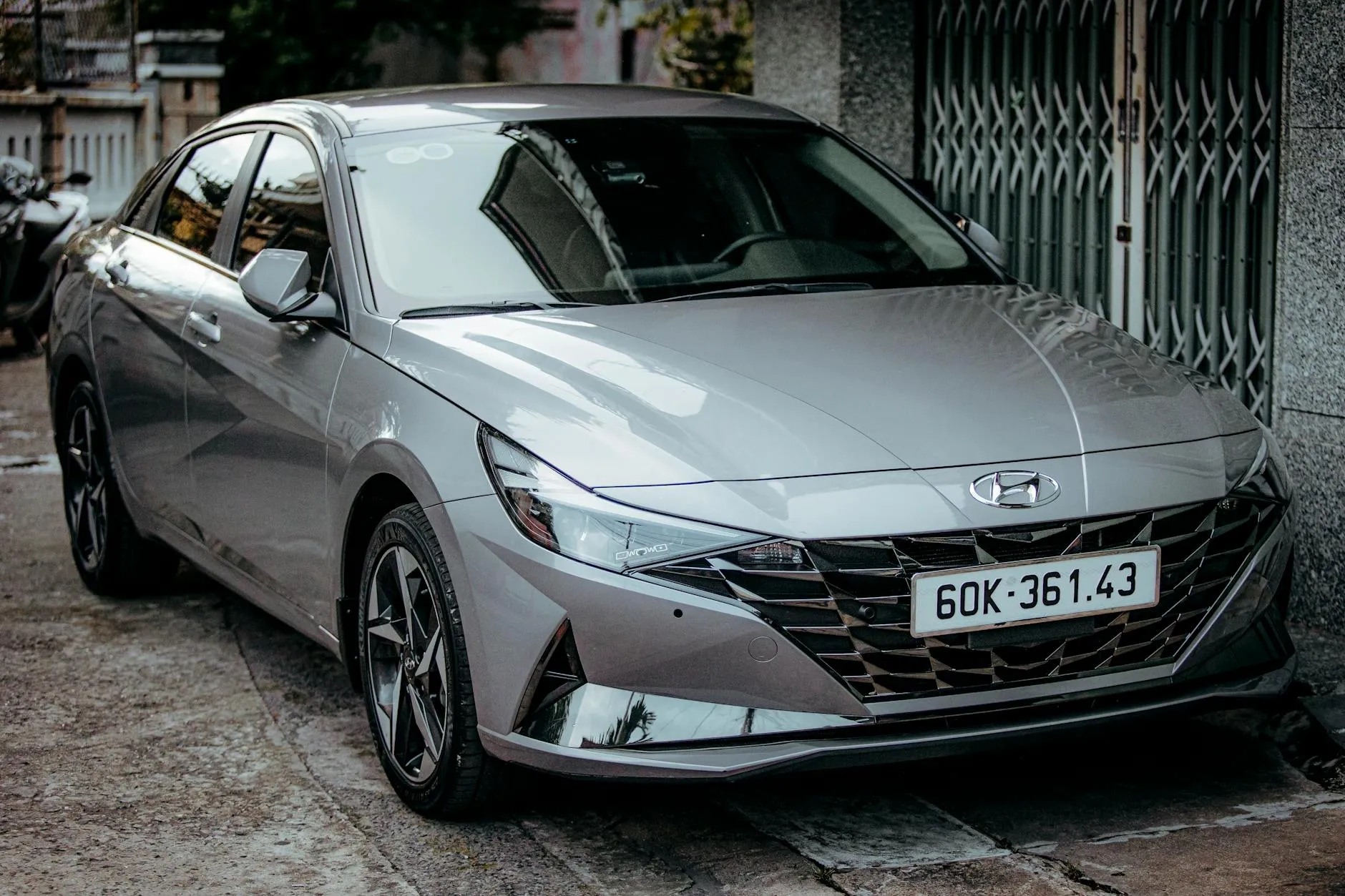
The Elantra is the most aggressively priced car on this list. The fifth-generation (2014-2016) and sixth-generation (2017) Elantras use the 1.8L and 2.0L Nu engines — both naturally aspirated, port-injected, and mechanically conservative. There's no turbo, no direct injection, no exotic anything. These engines are straightforward and durable. The pricing advantage is real: a 2016 Elantra with 100,000 miles will typically list $1,500-$2,000 below a comparable Civic, purely on badge perception.
Known issues: The Elantra's Nu engine is unrelated to the Theta II engine that affected some Hyundai/Kia models — confirm via the NHTSA recall database that no campaigns are open. Some 2014-2016 models develop a steering-column clunk that requires a coupling replacement (a relatively affordable fix). The 6-speed automatic can develop a slightly rough 2-3 shift at higher mileage — test it on a road that requires moderate acceleration.
What to inspect: Steering column behavior at low speeds. Rear suspension spring condition. Bluetooth and infotainment responsiveness. If buying a 2017, expect a slight price premium for the redesigned interior and improved ride. Use a structured pre-purchase inspection checklist to avoid missing anything.
At the sub-$8,000 tier, the gap between Honda/Toyota pricing and Mazda/Hyundai pricing is wider than at any higher budget. A 2016 Hyundai Elantra with 105,000 miles routinely lists for $1,500-$2,000 less than a 2016 Civic with the same mileage. The mechanical reliability gap between these specific cars is minimal — but the price gap is real. Buyers who can look past the badge will close on better cars faster.
Which Cars Should You Avoid Under $8,000?
The same traps that bite buyers at $9,000 and $10,000 are even more dangerous at $8,000, where margin for repair budget is thinner.
Nissan CVT-equipped sedans (Altima, Sentra, Versa). The Jatco CVTs in 2013-2017 Nissan sedans have documented reliability problems — shuddering, overheating, and outright failure between 80,000 and 120,000 miles. A replacement CVT runs $3,000-$4,500, which can turn an $8,000 car into a $12,000 problem. The reason these cars look cheap is the same reason you should pass.
Turbocharged anything without maintenance records. Ford EcoBoost, Volkswagen TSI, and some Hyundai/Kia turbo-four engines in this price tier require shorter oil-change intervals and occasional turbo-specific service. Without records, the risk of premature turbo failure and carbon-related driveability problems goes up sharply. At $8,000, stick with naturally aspirated.
Older luxury models. A 2012 BMW 3 Series or 2013 Audi A4 at $7,500 looks tempting on paper. In practice, you are inheriting the maintenance cost structure of a $40,000+ car: brake jobs at double the price, synthetic-only fluids on tight intervals, expensive diagnostic tools required for electrical faults. At $8,000, buy a reliable economy car, not a depreciated luxury car.
Salvage or rebuilt titles. Unless you are a mechanic and can personally verify the repair quality, skip them. There is enough clean-title inventory in the recommended models above that there's no need to gamble. Review how to vet a private seller before you commit.
How Do You Find These Cars Before Other Buyers?
The sub-$8,000 market moves faster than the $9,000+ tier because the buyer pool is much larger — budget shoppers, first-time car owners, and gig workers all converge here. A well-priced 2015 Mazda3 or 2014 Corolla with reasonable mileage rarely sits on Facebook Marketplace for more than a few hours in any metro. CarSnipe's monitoring of competitive metros shows well-priced sub-$8,000 reliable cars routinely attract 5 to 10 buyer messages within 20 minutes of posting, and listings cross the 30-message threshold inside roughly two hours — at which point new replies are typically ignored.
Manual browsing can't keep up with that. CarSnipe watches Facebook Marketplace continuously and fires a Telegram alert within roughly 3 minutes of a matching listing going live. You set the search parameters once — make, model, year range, price ceiling, maximum mileage, location radius — and the system runs around the clock, including overnight. When a 2015 Civic with 105,000 miles is listed at $7,400, you know about it before most other buyers have even opened the Facebook app.
Speed is the single biggest variable in whether you actually close on one of these cars. The buyer who sees the listing first, sends a strong opening message, and shows up that same day with cash is the buyer who drives it home. If your current approach is checking Marketplace twice a day, you're competing for the listings that everyone faster already passed on. For a complete framework on closing once you're in the door, see our playbook for beating other buyers on Facebook Marketplace. If your budget allows you to stretch to $10,000, that guide covers the next inventory tier up — meaningfully lower mileage and a broader pool of clean examples.
Cite this page
Every heading and every price line on this page has its own anchor, so a single vehicle's range can be linked directly rather than pointing at the whole guide. The price ranges were last revised in July 2026, as stated in the methodology note above.
Plain text:
CarSnipe. "Best Used Cars Under $8,000 on Facebook Marketplace (Reliable Daily Drivers for 2026)." Published May 12, 2026. Updated August 11, 2026. https://carsnipe.com/blog/best-used-cars-under-8000
HTML:
Catch Every Sub-$8K Deal the Moment It Hits Marketplace.
CarSnipe sends Telegram alerts within 3 minutes of a matching Facebook Marketplace listing. Set your filters once, then stop refreshing. 7-day free trial — cancel anytime before you are charged.
Start Free Trial on Telegramset a price ceiling and let the extension watch it · View pricing
Frequently Asked Questions
The Honda Civic (2014-2016) and Toyota Corolla (2013-2016) are the most reliable picks consistently available under $8,000 on Facebook Marketplace. Both run proven naturally aspirated powertrains with service-life expectations well over 250,000 miles. Expect 100,000-140,000 miles at this budget — prioritize maintenance records over the lowest odometer reading.
Yes, with patience and selectivity. The $7,000-$8,000 tier puts you into 2013-2017 Honda, Toyota, Mazda, and Hyundai models with clean titles and moderate mileage. Expect roughly 10,000-15,000 more miles than you'd see on a comparable $9,000 listing, so the maintenance history matters more here than at higher budgets.
Well-priced Civics, Corollas, and Mazda3s under $8,000 typically sell within 2-5 hours of being listed in metro areas. Listings in the lower half of the range — $6,500 to $7,500 — frequently disappear in 1-2 hours. Automated alerts through tools like CarSnipe are the most reliable way to see these listings before the first wave of buyers messages the seller.
For the models recommended above, anything under 140,000 miles is reasonable when supported by maintenance records. Vehicles over 150,000 miles without service history carry meaningfully higher repair risk. A well-maintained 130,000-mile Corolla is generally a better purchase than a poorly maintained 90,000-mile alternative — the paper trail matters more than the odometer at this tier.
Both are reasonable. The Civic holds resale value better and feels slightly more refined. The Elantra typically lists $1,000-$2,000 lower for equivalent year and mileage, giving you more vehicle for the same money. Mechanical reliability between the Civic 1.8L and the Elantra Nu engines is comparable at this price tier — buy whichever specific car comes with the most complete maintenance records.
Hero photo by Nguyễn Tiến Thịnh on Pexels.