
The two safest picks under $7,000 on Facebook Marketplace in May 2026 are the Honda Civic (2012-2015) with 120,000-170,000 miles and the Toyota Corolla (2012-2015) with 130,000-180,000 miles. Both run timing-chain 1.8L engines that routinely cross 250,000 miles when oil changes are kept up. Plan on $500-$1,000 of immediate maintenance on top of the purchase price — at this tier, that is the deal, not a surprise.
What Does $7,000 Actually Buy in 2026?
If you're shopping for used cars under 7000 dollars, let's be honest about the tier. At $7,000, you are buying a car with 120,000 to 180,000 miles, built between 2010 and 2015, almost always from a private seller. Paint will be faded on the roof and hood. The headlight lenses will be hazy. There will be curb rash on at least one wheel, and the driver's seat bolster will show wear. None of that is a problem. What you are paying for is a drivetrain with enough remaining life to give you three to five years of reliable transportation, not a cosmetic showpiece.
The tier directly above this one — see our guide if you want to step up to $8,000 — opens up cars with 100,000-140,000 miles and noticeably better cosmetics. Buyers working with tighter budgets around $5,000 will find the pool riskier, with more deferred maintenance and shorter remaining service lives at that price. At $7,000 you are sitting on the lower edge of what most people would call a functional used-car market. The cars are out there. You just have to know which ones to chase.
Here is what a $7,000 budget realistically gets you on Facebook Marketplace in May 2026:
- Model years: 2010-2015 for sedans and hatchbacks from reliable manufacturers
- Mileage: 120,000-180,000 miles is the working range; anything under 130,000 at this price sells inside a few hours
- Title: Clean titles are available, but salvage and rebuilt listings start showing up here too — read every listing carefully
- Seller mix: Roughly 80% private sellers, 20% small independent dealers asking $1,000-$1,500 more for the same year and mileage
Cox Automotive's used-vehicle research has tracked tightening supply across the sub-$10,000 segment for several years now, with affordable used inventory pulling in a disproportionate share of buyer interest. Translation for this tier: there are fewer good $7,000 cars on Marketplace than there were five years ago, and they get more attention faster. Knowing what to look for matters more than ever — and so does seeing the listing before the next ten buyers do.
Cars Under $7,000 for Sale Near You: How to Pull Today's Listings
Marketplace does not give you a clean "under $7,000" view by default. It ranks on engagement rather than recency, so a car listed this morning can sit below one that has been up for two weeks. The fix is to set the price ceiling and the sort order in the search URL itself, then open that URL instead of browsing the category.
Our search URL builder, already set to a $7,000 ceiling and newest-first, will assemble the address for you. Put one of the models from the table below in the keywords box and it becomes a search for that specific car at this budget.
Set the radius wider than feels comfortable. Marketplace measures distance from the seller's profile location rather than from the car, so a tight radius silently drops listings parked near you whose owner never updated their profile. Forty to sixty miles is a reasonable starting point in most metros.
Have the $7,000 Search Run Itself
Build the search once, then hand it to CarSnipe. It re-runs the search on a fixed interval and sends each new match to Telegram in about three minutes on Pro, so a car listed while you are at work is still waiting for you.
Start Free Trial on TelegramWhich Cars Under $7,000 Are Actually Reliable?
The Honda Civic (2012-2015), Toyota Corolla (2012-2015), Mazda3 (2012-2016), Honda Fit (2013-2015) and Hyundai Elantra (2013-2015) are the five that hold up at this budget. All five run naturally aspirated engines with no timing belt to service, all five have parts availability that keeps repair bills ordinary, and all five show up on Facebook Marketplace in enough volume that you can afford to pass on a bad one.
"Reliable" means little without a source, so we checked each pick against the federal record. The NHTSA table below counts the recall campaigns and owner complaints on file for each model-year range. Two picks come out with caveats. On 2014-2015 Civics, power-train complaints pile up around the CVT. On the Elantra, the engine is the component owners report most.
| Model | Years | Typical Marketplace asking price | The one thing to check |
|---|---|---|---|
| Honda Civic | 2012-2015 | $5,500-$7,000 | AC compressor, which fails around 100,000-130,000 miles |
| Toyota Corolla | 2012-2015 | $5,000-$6,800 | Water pump, due in the 120,000-150,000-mile window |
| Mazda3 | 2012-2016 | $5,000-$6,500 | Intake valve carbon buildup on the SkyActiv engines around 100,000 miles |
| Honda Fit | 2013-2015 | $5,500-$6,800 | On a 2015, whether the CVT shudder software update was done |
| Hyundai Elantra | 2013-2015 | $4,500-$6,500 | Steering-column clunk, a coupling replacement under $300 |
Asking ranges are the per-model figures stated elsewhere on this page, drawn from CarSnipe's Facebook Marketplace alert data. They are what private sellers ask, not what cars sold for.
What the NHTSA record shows
| Model | Years | Recalls | Complaints | Top complaint |
|---|---|---|---|---|
| Honda Civic | 2012-2015 | 5 | 1,445 | Air bags (378), power train (345) |
| Toyota Corolla | 2012-2015 | 7 | 1,136 | Air bags (567) |
| Mazda3 | 2012-2016 | 8 | 713 | Electrical system (130) |
| Honda Fit | 2013, 2015 | 14 | 458 | Electrical system (137) |
| Hyundai Elantra | 2013-2015 | 6 | 1,977 | Engine (492) |
Source: NHTSA recall and complaint records, pulled October 6, 2026. Complaints are raw counts and don't adjust for sales, so a big seller like the Civic logs more than a Fit. There was no US-market 2014 Fit. Check any specific car's open recalls by VIN with NHTSA's recall lookup.
Honda Civic (2012-2015) — Safest Bet
Realistic price range: $5,500-$7,000 | Typical mileage: 120,000-170,000 | Ideal mileage threshold: Under 150,000
The ninth-generation Civic is the answer when someone asks the "what should I buy" question with no other context. The 1.8L R18 engine is timing-chain (no belt service), conservatively tuned, and well past its proving-out period. A 145,000-mile R18 with documented oil changes has nothing scary on its horizon. The 2012-2013 cars use a conventional 5-speed automatic. The 2014-2015 cars switched to a CVT, and NHTSA's complaint file shows it: power train is the most-reported component for both CVT years (98 of 291 complaints for 2014, 176 of 380 for 2015). Honda also recalled 2014-2015 Civics built January 16 to November 6, 2014 (campaign 15V574000) because the transmission software could damage the drive pulley shaft. If the budget allows, buy a 2012-2013. On a 2014-2015, confirm by VIN that the recall work was done.
Known issues: AC compressor failures around 100,000-130,000 miles (budget $500-$700 to replace), and front brake rotor warping. The 2012 has three recall campaigns on file (a steering column, a fuel-line O-ring and a driveshaft retaining clip), each limited to a narrow build window. Verify recall completion on the NHTSA database using the VIN. Avoid any 2015 EX model with the optional sunroof if there are signs of water damage in the headliner, because the drain tubes clog and leak.
Toyota Corolla (2012-2015) — Reliability vs. Driving Engagement Tradeoff
Realistic price range: $5,000-$6,800 | Typical mileage: 130,000-180,000 | Ideal mileage threshold: Under 160,000
The Corolla is the car you buy when you have decided that "exciting" is not in the requirements list. The 2012-2013 models use the 1.8L 2ZR-FE with a 4-speed automatic that is dated but borderline indestructible. The 2014-2015 redesign brought a CVT — and unlike Nissan's troubled units, Toyota's CVT has held up well in the field. iSeeCars long-service-life analyses regularly rank the Corolla among the top five vehicles most likely to cross 200,000 miles, which is exactly what you want validated when you're staring at a 160,000-mile odometer on Marketplace.
Known issues: Air bags dominate this car's NHTSA file. They come up in 567 of 1,136 complaints, and the 2012-2013 cars carry four passenger air bag inflator recall campaigns. Confirm by VIN that the replacement was done. Some early CVT-equipped 2014-2015 Corollas exhibit a slight off-the-line hesitation that is calibration, not failure. Water pumps are due in the 120,000-150,000-mile window; if it has not been done, plan for it. The driving experience is genuinely numb. If you commute 50 miles a day on twisty roads, the Mazda3 below will make you happier.
Mazda3 (2012-2016) — Best Driving Experience at This Price
Realistic price range: $5,000-$6,500 | Typical mileage: 115,000-165,000 | Ideal mileage threshold: Under 145,000
The Mazda3 is the value play. The 2012-2013 models still use the older 2.0L MZR engine; the 2014-2016 SkyActiv-G refresh is the one you actually want. Both are naturally aspirated and durable, but the SkyActiv chassis is genuinely engaging on a back road, which almost no other car in this tier can claim. The brand-perception discount is real: a 2014 Mazda3 with the same mileage as a comparable Civic typically lists $700-$1,200 lower, purely because the badge does not have Honda's resale magnet.
Known issues: Direct injection on the SkyActiv engines leads to intake valve carbon buildup around 100,000 miles; a one-time $300-$400 walnut blast handles it. Rear suspension trailing-arm bushings wear and produce a knock you can hear on broken pavement. Rear brake calipers occasionally stick on neglected examples. The 6-speed automatic is reliable; the manual is even more so and significantly cheaper to find. NHTSA lists eight recall campaigns across 2012-2016, three of them for the fuel tank on 2014-2016 cars, so run the VIN.
Honda Fit (2013-2015) — Best for Cargo Utility
Realistic price range: $5,500-$6,800 | Typical mileage: 110,000-160,000 | Ideal mileage threshold: Under 140,000
The Fit is the answer if you regularly haul anything: gig deliveries, dorm moves, weekend lumber runs, IKEA furniture. The Magic Seat system folds the rear seats flat against the floor in seconds, opening up cargo space that genuinely rivals small SUVs. Honda didn't sell a 2014 Fit in the US, so the choice is a second-generation 2013 or a third-generation 2015. Both run a 1.5L four-cylinder with no timing belt.
Known issues: 2015 specifically (the first year of the third generation) shipped with a CVT calibration that produced a low-speed shudder; Honda's software update fixed most cases, but verify before buying. Some 2015 Fits are also in recall 15V574000, the same transmission-software campaign as the Civic, so check the VIN. On a 2013, look at the air bags: seven of its ten recall campaigns cover air bag inflators. The Fit's thinner-gauge paint chips earlier than larger Hondas. Run a vehicle history report carefully. The small size means even modest collisions can affect alignment, and Fit accident history is overrepresented relative to other Hondas.
Hyundai Elantra (2013-2015) — Lowest Price Per Feature
Realistic price range: $4,500-$6,500 | Typical mileage: 115,000-165,000 | Ideal mileage threshold: Under 140,000
The Elantra is the most aggressively priced car on this list, and it is the car most likely to come loaded with features that Hondas and Toyotas at this price will not have — heated seats, larger infotainment screens, and on higher trims, leather upholstery. The 1.8L Nu engine is naturally aspirated, port-injected, and mechanically conservative. It is important to be specific: the Elantra's Nu engine is not the troubled 2.0L/2.4L Theta II that affected some Sonatas, Optimas, and Santa Fes from the same era. Confirm via VIN that no Theta II recalls apply to the specific car you're looking at.
NHTSA's file does flag the Elantra's engine, though. Engine is the most-reported component across 2013-2015 Elantras (492 of 1,977 complaints), and the 2013 alone drew 1,330 complaints, more than any single year of the other four picks. The Elantra sold in big numbers, which pushes raw counts up, but we'd still want oil-change records before buying one. On a 2015, also check the VIN for recall 26V307000, a May 2026 campaign for a driver's air bag inflator that can rupture.
Known issues: Steering-column clunk on some 2013-2015 examples that requires a coupling replacement (under $300 at an independent shop). Slightly rough 2-to-3 shift on the 6-speed automatic at higher mileage. Paint quality is below Honda/Toyota standards and clear coat failures on white and silver cars are not unusual after ten years. None of this is catastrophic, and the pricing more than compensates.
At the $7,000 tier the gap between Honda/Toyota pricing and Mazda/Hyundai pricing is wider than at any other budget. A 2014 Hyundai Elantra with 130,000 miles routinely lists $1,500-$2,000 below a 2014 Civic with the same mileage and condition. The mechanical reliability gap between these specific cars is small. The price gap is not. Buyers willing to look past the badge consistently end up in better cars faster.
Which Cars Should You Avoid Under $7,000?
Margin for error gets thin at $7,000. The same problem cars that bite buyers at $9,000 or $10,000 become genuinely dangerous here because one bad repair can eat half the purchase price.
Nissan Altima, Sentra, and Versa (2013-2017) with the Jatco CVT. The CVTs in these cars have documented failure patterns between 80,000 and 130,000 miles: shuddering, overheating, then total loss of drive. Replacement transmissions run $3,000-$4,500 installed. Consumer Reports has flagged these cars in worst-of reliability listings for years. A $6,000 Altima with 110,000 miles is not the deal it appears to be. NHTSA's complaint file agrees: power train is the most-reported component for the 2013-2017 Altima (1,243 of 5,323 complaints), Sentra (868 of 1,869) and Versa (283 of 852).
Hyundai Sonata and Kia Optima (2011-2014) with the 2.0L or 2.4L Theta II engine. The Theta II engine class was the subject of one of the largest engine-defect campaigns in modern automotive history, involving bearing failure and resulting engine fires. Many cars received warranty replacements, but plenty are still on the road with unaddressed risk. The recall situation is complex, so verify VIN status on the NHTSA database before you even drive out to look at one. The Elantra above is unaffected; the Sonata and Optima are not. For 2011-2014, engine is the most-reported component in NHTSA complaints for both cars: 2,572 of 7,590 for the Sonata and 1,549 of 3,481 for the Optima.
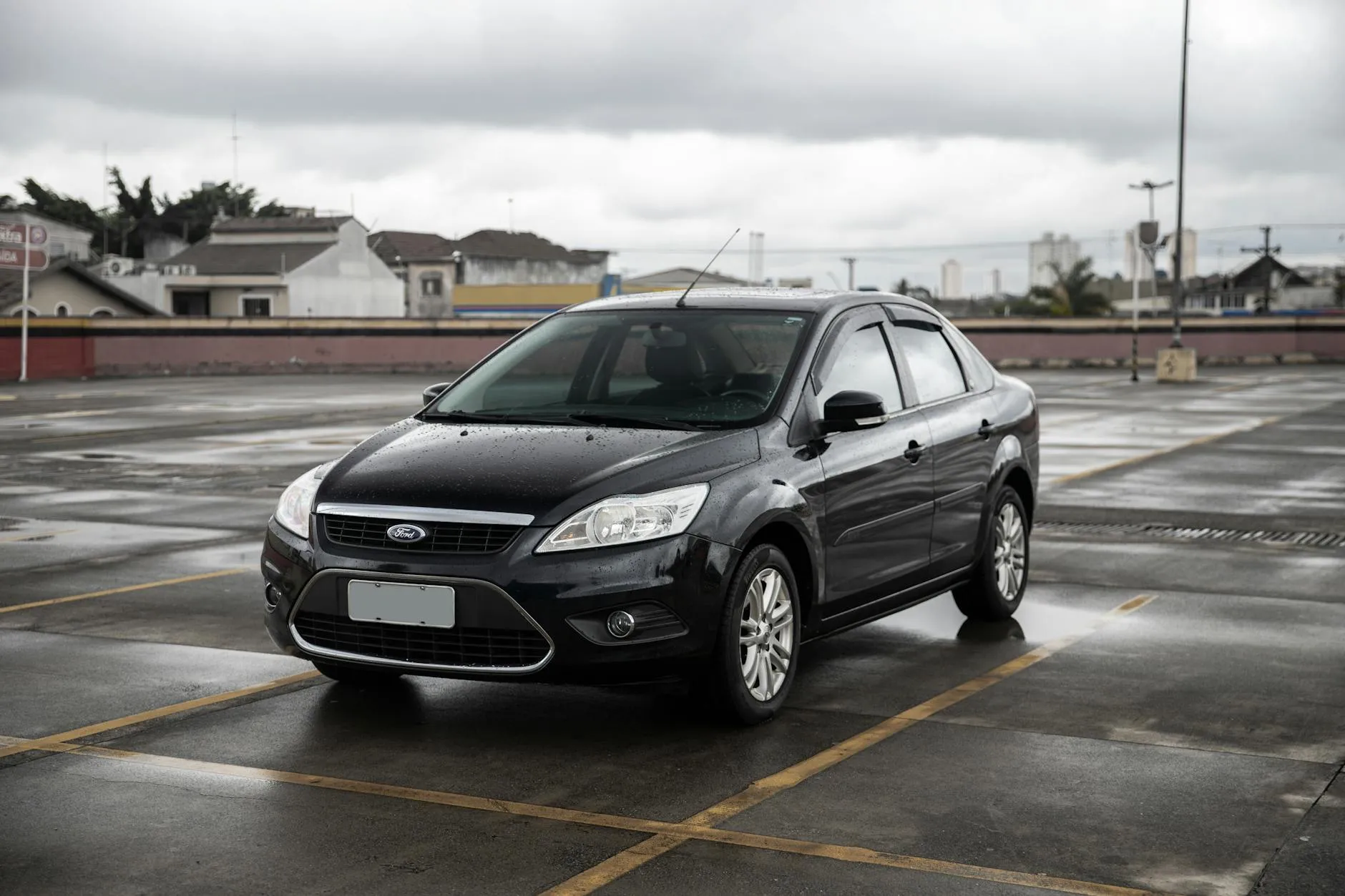
Early Ford EcoBoost engines (2013-2015) without records. The 1.6L and 2.0L EcoBoost engines in Escape, Fusion, and Focus models from this era are sensitive to oil-change intervals and have specific turbo and intake-cooling issues. A documented EcoBoost can be fine. An undocumented one in this price tier is a gamble you don't need to take when the naturally aspirated alternatives above exist.
Timing-belt-equipped cars without recent service. Subaru flat-fours from 2010-2012, Volkswagen 2.5L inline-fives, and older Hyundai V6s all use timing belts that need replacement at 90,000-105,000 miles. If the belt has not been done and the car is past the interval, factor $700-$1,200 into the purchase price or walk away. A snapped belt on an interference engine totals the engine.
Rust-belt cars without an underbody inspection. 2010-2015 cars from salt states (the Northeast, Midwest, and Mid-Atlantic) commonly show frame rust, brake-line corrosion, and rocker-panel rot by 10+ years of age. Surface rust on suspension parts is fine; flaky rust on structural metal is a hard pass. Bring a flashlight and look. Our full pre-purchase inspection checklist covers exactly what to look at and in what order.
Salvage and rebuilt titles. They appear more often at this tier. Unless you have the mechanical knowledge to verify the repair quality yourself, skip them. There is enough clean-title inventory in the five recommended models above to never need to gamble on a salvage car.
What Should You Check Before Paying $7,000 for a Used Car?
Forty-five minutes of careful inspection is the difference between buying a car with three good years left and buying a car with three good months left. Bring an OBD-II scanner (a $25 Bluetooth dongle works), a flashlight, a tire tread gauge or a quarter, and a magnet. Walk through these steps in order.
- Insist on a cold start. If the engine is already warm when you arrive, the seller may be hiding a cold-start tick, timing chain rattle, or head gasket weep. Reschedule the viewing for a time the car has sat overnight. This is non-negotiable on a $7,000 purchase.
- Check the dipsticks before driving. Pull the engine oil dipstick — fluid should be amber to dark brown, not sludgy black. Pull the transmission dipstick if equipped — fluid should be red or pink, not brown and never burnt-smelling. Open the coolant reservoir cold and verify the correct color (orange for most Hondas and Mazdas, pink for Toyotas, green or pink for Hyundais). Brown sludge in either reservoir is a hard stop.
- Plug in the OBD-II scanner. Read active codes, pending codes, and readiness monitors. If the monitors are mostly "incomplete" or "not ready," the seller probably cleared codes within the last 50 miles to hide a check-engine light. That alone is reason enough to walk.
- Walk the undercarriage with a flashlight. Active drips at the valve cover, oil pan, or transmission pan are red flags. Light surface rust on suspension components is normal at this age. Flaky, scaling rust on the frame rails, subframe, or rocker panels is not. Check both CV boots on the front axles for tears — a $400-$600 repair when one fails.
- Drive on three road types. Empty parking lot first — lock-to-lock steering and figure-eights to surface clunks and bushings. Surface streets next — feel transmission shifts at 25-40 mph. Highway on-ramp last — full acceleration through the gears and a lane change at 60+ mph. Twenty minutes minimum, and ask the seller not to talk during it.
- Verify every electrical system. AC on max at idle (cold air within a minute), heat, every power window, locks from every door, headlights and high beams, every dashboard button, all dome lights. Modern electrical repairs on a ten-year-old car add up quickly — a single failed power window regulator runs $250-$400.
- Get a pre-purchase inspection if anything is unclear. A $100-$150 inspection at an independent shop is cheap insurance on a $7,000 commitment. A seller who refuses to let you take the car to a shop you choose is telling you something — listen.
Budget for immediate maintenance. On top of the purchase price, plan $500-$1,000 for items that will need attention in the first 1,000 miles: fresh oil and filter, an air filter, possibly cabin filter and serpentine belt, new wiper blades, a tire rotation and alignment check, and any one obvious deferred item the inspection surfaces. Treat this as part of the cost of entry, not a surprise.
Where Do the Best Sub-$7,000 Listings Show Up First?
The sub-$7,000 tier moves faster than any other price band on Facebook Marketplace. The buyer pool is enormous — students, gig workers, first-car shoppers, families replacing a totaled vehicle, new arrivals to the country. A 2014 Civic listed at $6,800 with 135,000 miles and clean photos rarely sits more than two hours in any reasonable metro. Our internal monitoring across competitive markets shows well-priced reliable cars under $7,000 routinely pull 8 to 15 buyer messages inside the first 30 minutes of going live. By the time the listing has 30+ replies, the seller stops reading new messages.
Manual refreshing of Facebook Marketplace cannot win against that timing. CarSnipe monitors Marketplace continuously and fires a Telegram alert within roughly three minutes of a matching listing going live. Set the parameters once — make, model, year range, price ceiling, maximum mileage, location radius — and the system runs around the clock, including the overnight and early-morning hours when many of the best deals get posted by sellers in different time zones.
Model-specific alert setup tip: Don't create one broad "any reliable used car under $7,000" alert. Create three or four narrow ones. A Civic alert (2012-2015, under 160,000 miles, under $7,000). A Corolla alert (2012-2015, under 170,000 miles, under $6,800). A Mazda3 alert (2014-2016, under 150,000 miles, under $6,500). Narrower filters mean fewer false positives, which means you actually read every alert that fires instead of muting the channel by day three. The Telegram message arrives with the listing photo, price, mileage, and a one-tap link to message the seller — you can send a strong opening message from your phone in under 60 seconds.
Speed is the single biggest variable in whether you close on one of these cars. If your current approach is opening Marketplace twice a day, you are competing exclusively for listings that faster buyers already passed on. For the framework on what to say once you're in the door, see our playbook on finding reliable cars in adjacent budget tiers — the closing tactics translate directly. If your budget grows after a few months, the $8,000 buyer guide covers the next inventory tier up.
How we priced and checked these
The asking ranges in the model table and under each model heading come from CarSnipe's Facebook Marketplace alert data. They are what private sellers ask when a listing goes up, not what the car sold for.
Recall and complaint counts are from NHTSA, pulled on October 6, 2026 through its public recall and complaint data. We queried every model year in each range and added the years together. A recall campaign that covers several years counts once. Complaints are summed, and the component count is the number of complaints that name it. These are raw counts with no adjustment for sales volume, so read them as a guide to where owners report trouble. They are not a reliability score.
This page was last updated October 6, 2026. Used-car prices move, so if you are reading this long after that date, treat the ranges as the shape of the market rather than today's quote. You may republish these figures with attribution and a link to https://carsnipe.com/blog/best-used-cars-under-7000.
Embed this table
Copy the block below to put the model table on your own page. The source line is part of the snippet and needs to stay in.
Cite this page
Plain text:
CarSnipe. "Best Used Cars Under $7,000 on Facebook Marketplace (What's Actually Reliable at This Price)." Published May 19, 2026. Updated October 6, 2026. https://carsnipe.com/blog/best-used-cars-under-7000
HTML:
Photo by Victor Miyata on Pexels
Catch Every Sub-$7K Reliable Car the Moment It Hits Marketplace.
CarSnipe sends Telegram alerts within 3 minutes of a matching Facebook Marketplace listing. Set your filters once, then stop refreshing. 7-day free trial — cancel anytime before you are charged.
Start Free Trial on Telegramget alerted when one lands in your price range · View pricing
Frequently Asked Questions
The Honda Civic (2012-2015) and Toyota Corolla (2012-2015) are the safest mainstream picks consistently available under $7,000 on Facebook Marketplace. Both run timing-chain 1.8L engines with documented service lives over 250,000 miles. Expect 120,000-170,000 miles at this budget, and prioritize maintenance records over the lowest odometer reading. The Mazda3 (2012-2016) often lists $500-$1,000 lower for equivalent condition. Among Civics, NHTSA complaint data favors the 2012-2013 cars, since power train is the most-reported component on the CVT-equipped 2014-2015 models.
Yes, with selectivity. The $7,000 tier puts you into 2010-2015 sedans and hatchbacks from reliable manufacturers, usually with 120,000-180,000 miles. Maintenance records matter more than odometer readings here — a documented 150,000-mile Corolla beats an undocumented 110,000-mile one. Budget another $500-$1,000 for immediate deferred maintenance on top of the purchase price.
Avoid the Nissan Altima, Sentra, and Versa with Jatco CVTs (2013-2017), Hyundai Sonata and Kia Optima with the 2.0L or 2.4L Theta II engine (verify open NHTSA recalls), early Ford EcoBoost engines without records, older BMW and Audi models in this price range, and any salvage or rebuilt title car you cannot personally verify the repair quality on. These cars look cheap for a reason — repair costs can quickly exceed the purchase price.
For the Civic, Corolla, Mazda3, Fit, and Elantra recommended above, up to 170,000 miles is reasonable when maintenance records support it. iSeeCars long-service-life data consistently shows these models among vehicles most likely to cross 200,000 miles. The honest threshold at this budget is documentation, not the odometer — a well-serviced 160,000-mile car is a better purchase than a neglected 120,000-mile one.